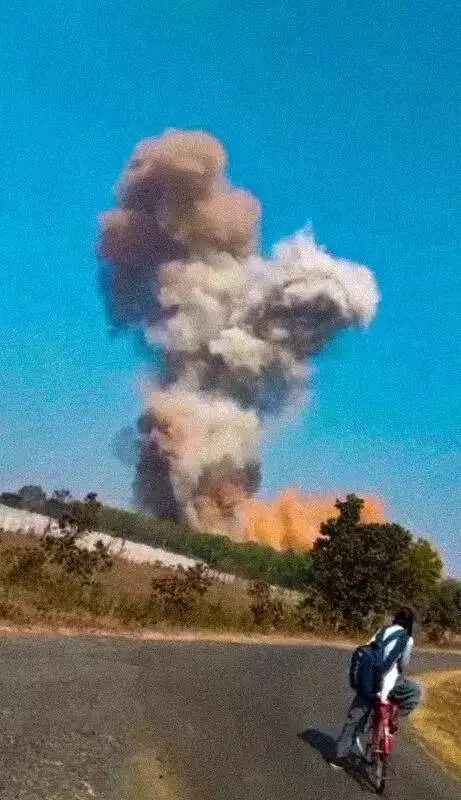
In a significant legal development, state-owned defence giant Munitions India Limited (MIL) is gearing up to challenge a stringent order from the National Green Tribunal (NGT) concerning the tragic 2025 explosion at its Ordnance Factory in Bhandara. The blast, which occurred in the Low Temperature Plastic Explosive (LTPE) unit, claimed the lives of nine people and left the facility completely non-functional.
The NGT's Stern Directive and MIL's Legal Counter
The National Green Tribunal, which took suo motu cognizance of the incident based on a media report, has issued a ruling that has major implications for the defence public sector undertaking. The green court has mandated that criminal proceedings be initiated against the company. More critically, it has ordered that MIL should not be allowed to operate the unit until it fully implements all remedial measures recommended by the Department of Industrial Safety and Health (DISH).
Sources within MIL have confirmed that the company plans to approach the High Court to contest this NGT order. They pointed out that a police case was registered immediately after the devastating explosion. The unit, which produced explosives used by the Indian Army for demolition purposes, remains shut down. Rebuilding the entire facility is estimated to take at least another year, and plans for this reconstruction have not yet been formally initiated.

Operational Halt and Environmental Concerns
The suspension of operations at the Bhandara factory has had a direct impact on national defence supplies. The production and supply of LTPE to the Indian Army has been completely halted since the accident. The Bhandara Ordnance Factory is a crucial installation for MIL, specializing in manufacturing high-energy materials like HMX and RDX.
The NGT also involved the Maharashtra Pollution Control Board (MPCB) in the case as a respondent. The MPCB's affidavit revealed alarming environmental findings. The board's tests showed that the level of particulate matter had exceeded permissible limits at three key locations: Sahauli village in Bhandara, the main factory gate, and the residential colony associated with the facility. These findings formed part of the tribunal's basis for its strict order.
Wider Implications and the Path Ahead
This case underscores the increasing intersection of industrial safety, environmental regulation, and defence production. The NGT's intervention, typically focused on ecological issues, into a major industrial accident highlights the broader environmental consequences of such incidents. MIL's decision to escalate the matter to the High Court sets the stage for a pivotal legal battle that could define compliance standards for defence PSUs.
The outcome will be closely watched, as it balances the urgent need for stringent safety and environmental protocols against the critical requirements of uninterrupted defence manufacturing. For now, the shattered LTPE unit in Bhandara stands as a somber reminder of the cost of lapses, as the legal and procedural machinery grinds into motion to address the aftermath of the 2025 tragedy.