Nagpur Nylon Manja Menace Continues Unabated Despite High Court Ban
In a glaring example of the gap between judicial directives and ground-level enforcement, the dangerous nylon manja has continued to wreak havoc during Nagpur's kite flying season. Despite a clear ban and strict orders from the Nagpur bench of the Bombay High Court, this glass-coated string has left at least 16 people injured and 53 birds entangled, with many fatalities reported.
Deadly Consequences for Humans and Wildlife
The invisible, glass-coated nylon strings proved particularly deadly this season. According to data from the Government Medical College and Hospital (GMCH), 16 patients with kite string-related injuries were treated at the casualty department between January 11 and January 19. While most received first aid and were discharged, one patient required hospitalisation under orthopaedic care due to severe injuries.
The actual human injury count could be significantly higher, as this data only represents cases from a single government medical facility. Many minor injuries likely went unreported at other healthcare centers across the city.

Avian Casualties Tell a Grimmer Story
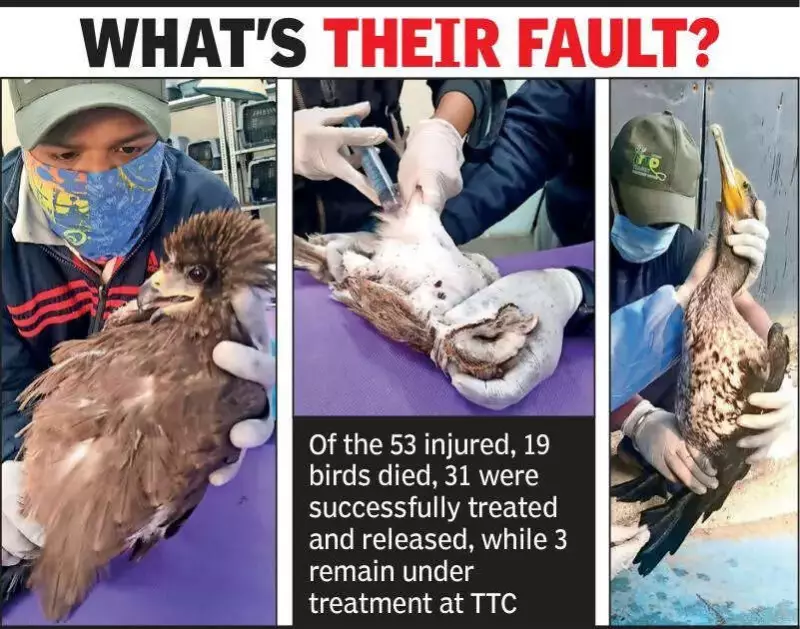
The impact on Nagpur's bird population was even more devastating. Data from the Transit Treatment Centre (TTC) at Seminary Hills revealed that since January 7, 53 birds were injured due to kite strings. Tragically, 19 of these birds lost their lives, while 31 were successfully treated and released back into the wild. Three birds remain under treatment, fighting for survival.
Animal welfare activist Swapnil Bodhane of Help for Animal Welfare Association, Nagpur, expressed frustration at the continued irresponsible use of nylon manja despite the ban. "The material neither decomposes nor breaks easily," Bodhane warned, noting that large quantities remain tangled on trees, posing a long-term threat to wildlife.
High Court's Stringent Measures Meet Weak Enforcement
This year, taking serious note of the recurring threat, the Bombay High Court had directed the district administration, civic bodies, and police to implement a comprehensive crackdown. The court mandated a penalty of Rs 2.5 lakh on sellers of nylon manja and a Rs 25,000 fine on users, including parents of minors. The collected fines were to be utilized for public welfare initiatives.
However, during a recent hearing, authorities informed the court that action had been taken in only two cases in Nagpur so far. This minimal enforcement figure starkly contrasts with the injury data reported by hospitals and rescue centers, highlighting significant implementation failures.
Police Response and Preventive Measures
Deputy Commissioner of Police Lohit Matani defended police efforts, stating that authorities took various safety measures during the kite-flying period. "We kept flyovers shut during the period and installed safety rods on the handlebars of two-wheelers to prevent injuries," Matani explained. He claimed their initiatives proved effective and kept injury counts lower compared to previous years.
Matani added that data on actions taken is being compiled for submission to the court, including information about:
- Safety measure implementations
- Public awareness drives conducted
- Preventive steps undertaken during the kite season
Call for Stronger Deterrents and Future Action
Activist Swapnil Bodhane stressed the urgent need for strong charge sheets against offenders to create an effective deterrent. The current situation reveals multiple systemic issues that need addressing:
- Inadequate enforcement of existing bans
- Limited accountability for violators
- Persistent availability of banned materials
- Insufficient public awareness about dangers
The nylon manja crisis in Nagpur serves as a sobering reminder that judicial orders alone cannot solve public safety issues without robust implementation mechanisms and sustained enforcement efforts from all concerned authorities.