

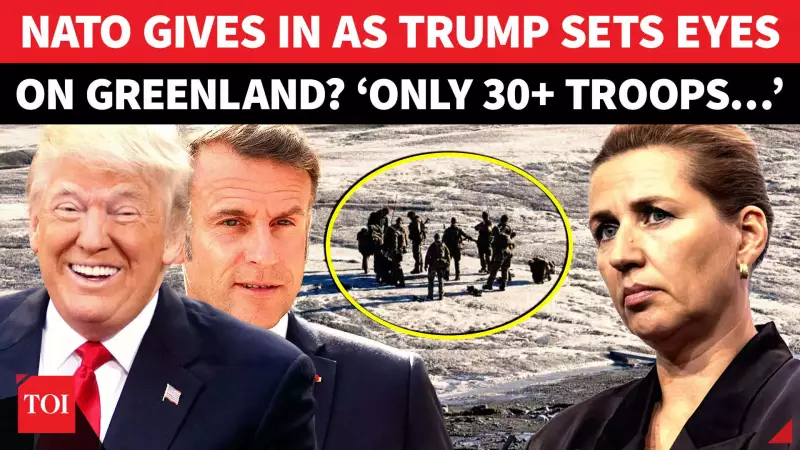
NATO Allies Rush Symbolic Troops to Greenland Amid Trump's Renewed Acquisition Push
Tensions are escalating rapidly across the Arctic region. European NATO members are now deploying small military contingents to Greenland. This move comes directly in response to renewed efforts by U.S. President Donald Trump to acquire the vast, strategically important island.
A Show of Support with Limited Military Muscle
France and Germany are taking the lead in this hurried deployment. Other alliance members are contributing only symbolic numbers of personnel. Critics argue this limited troop presence starkly highlights Europe's constrained military capabilities when facing pressure from Washington.
The deployment is intended as a gesture of solidarity with Denmark, which governs Greenland. However, the small scale of the force—reportedly involving only about 34 troops from some nations—speaks volumes. It reveals deep fractures within the NATO alliance over how to handle this unprecedented situation.

Trump Signals Greenland as a National Security Priority
President Trump has clearly signaled that acquiring Greenland is now a top national security priority for his administration. Official confirmations from Washington reveal that talks about a potential acquisition are actively ongoing. This has sent shockwaves through European capitals.
European leaders are issuing stern warnings. They state that any attempt by the United States to annex territory from a fellow NATO ally would have catastrophic consequences. Such an action, they argue, would fundamentally shatter the Western security order that has existed for decades.
A Deepening Transatlantic Rift
The Greenland standoff is not an isolated incident. It underscores a much broader and deepening rift between the United States and its European allies. The core issues driving this division are multifaceted.
- Arctic Security: Control of Greenland offers significant strategic advantages in the increasingly contested Arctic.
- Sovereignty: The very principle of national sovereignty is now under direct challenge within the alliance.
- Unpredictable Policy: President Trump's foreign policy agenda continues to create uncertainty and alarm among traditional partners.
The situation remains fluid and highly volatile. The world watches closely as this dramatic confrontation between allies unfolds in the frozen north, testing the limits of the transatlantic partnership.






