

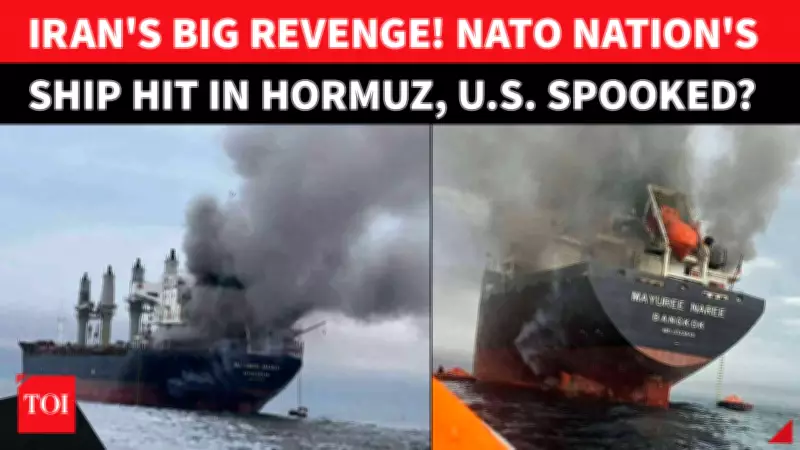
NATO Nation Ship Hit By Iran In Hormuz? Exploding Projectile Burns Tanker
In a chilling escalation of the ongoing US-Israel conflict, debris from projectiles struck a German container ship near the strategic Strait of Hormuz, igniting a fire onboard. The incident involves the vessel "Source Blessing," operated by the German shipping giant Hapag-Lloyd, and has raised alarms about the security of global trade routes in the volatile region.
Escalating Tensions in the Gulf
This attack comes just one day after Hapag-Lloyd, a firm based in a NATO nation, suspended all cargo bookings for the Gulf area. The company cited the regional mayhem and escalating threats to maritime security as primary reasons for this decision. The Strait of Hormuz is a critical chokepoint for global oil shipments, and any disruption here can have far-reaching economic consequences.
The timing of this incident is particularly significant, as it occurred amidst heightened tensions between the United States, Israel, and Iran. The conflict has been intensifying, with recent developments including Iran's new Supreme Leader making bold pledges regarding the Strait of Hormuz and warnings directed at US leadership.

US Military Readiness in Question
In a related development, the US Energy Secretary stated in an interview with CNBC that the American military is currently "not ready" to escort tankers through the Strait of Hormuz. This admission has sparked concerns about the ability of the US and its allies to protect commercial shipping in the region.
The lack of readiness highlights the complex challenges faced by NATO and other international forces as they navigate the escalating conflict. The situation is further complicated by political statements from US officials, including former President Trump, who has made startling remarks about the incidents in Hormuz.
Broader Implications for Global Trade
The attack on the "Source Blessing" is not an isolated event. Recent reports indicate a series of aggressive actions by Iranian forces, including attacks on high-rise buildings in Dubai and Bahrain, as well as assaults on Saudi diplomatic areas. These actions are part of a broader strategy by Iran to exert pressure on the US and its allies.
Iranian military leaders have drawn a red line at the Strait of Hormuz, vowing that "not a drop of oil" will pass through for US and allied nations if certain conditions are not met. They have listed three specific conditions for halting hostilities against Israel and the US, emphasizing that the war will not stop until these demands are addressed.
Political Fallout and International Response
The incident has triggered a wave of political reactions. In the US, there have been clashes between Republican lawmakers and Pentagon officials over decision-making processes related to the Iran conflict. Some critics argue that US policy on Iran is being dictated by Israel, leading to a perceived big U-turn in US Middle East strategy.
Meanwhile, discussions in political circles have focused on the long-term viability of military actions against Iran. Some analysts, like Adam Smith, have shut down Pentagon officials by arguing that "Iran will simply rebuild" and that previous strategies have failed. This underscores the deep divisions and uncertainties surrounding the conflict.
As the situation continues to evolve, the international community is closely monitoring developments in the Strait of Hormuz. The safety of maritime routes is paramount for global energy supplies and trade, making any escalation here a matter of urgent concern for nations worldwide.






