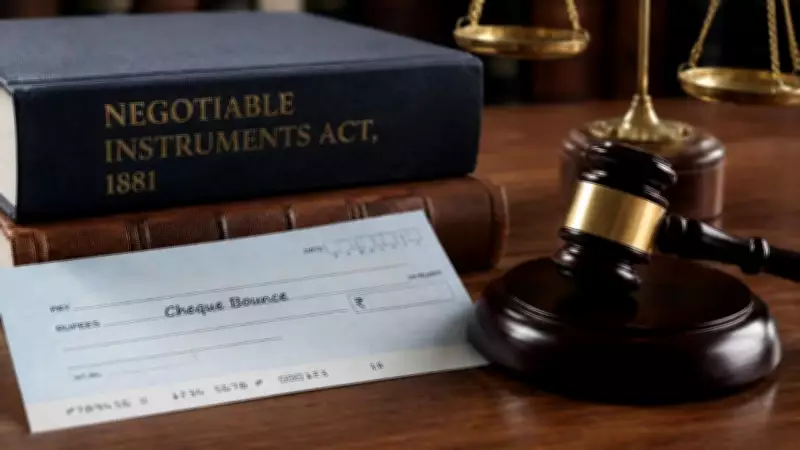
New Delhi: According to the National Crime Records Bureau (NCRB) data for 2024, only 18 cases were registered under the Negotiable Instruments Act across the country. All these cases pertained to cheque bounce and were confined to just two states: Jharkhand (10 cases) and Uttar Pradesh (8 cases). This remarkably low number has sparked questions about the Act, one of India's oldest commercial laws, which appears to be fading into irrelevance.
What is the Negotiable Instruments Act, 1881?
The Negotiable Instruments Act, 1881 is a central legislation that regulates and defines negotiable instruments used for making and receiving payments in trade or commerce. A negotiable instrument is a written document guaranteeing payment of a specific amount of money, either on demand or at a fixed future date, and can be freely transferred from one person to another.
The NCRB's 2024 data shows that across 28 states and 8 union territories, only 18 cases were registered under the Act. Of these, 10 were in Jharkhand and 8 in Uttar Pradesh, all involving cheque bounce. Notably, not a single case of promissory note fraud, bill of exchange disputes, or any other provision of the Act was recorded.

Key Financial Instruments Covered
The Act primarily covers three financial instruments:
- Promissory note: A written promise binding a person to pay a fixed sum to another.
- Bill of Exchange: A written order directing a third party to pay a specific amount to a named person.
- Cheque: Similar to a bill of exchange but drawn specifically on a bank.
Among these, the cheque is the most widely used and consequently the most litigated instrument.
The basic doctrine of the Act is to create a legal framework for financial transactions. It defines who can issue such instruments, how they can be transferred, and the rights and liabilities of the drawer (the person issuing the cheque), the drawee (the bank), and the payee (the recipient). The Act further deals with dishonoured instruments—when a cheque bounces or a bill is not accepted.
Section 138: The Most Used Provision
Section 138 of the Negotiable Instruments Act deals specifically with cheque bounce. Under this provision, the bouncing of a cheque is a criminal offence. If an unpaid cheque is returned from the bank due to insufficient funds or account closure, the person who issued the cheque can be held criminally liable.
The procedure requires the payee to send a legal notice within 30 days of receiving the bank's memo. The drawer then has 15 days to make the payment. If payment is still not made, the payee can file a criminal complaint in court within the next 30 days. Punishment under the Act includes up to two years of imprisonment, a fine of up to twice the cheque amount, or both.
About the Author: The TOI Legal Desk is a dedicated team of journalists committed to tracking and reporting on courts, legal developments, and judicial proceedings across the country and world.