

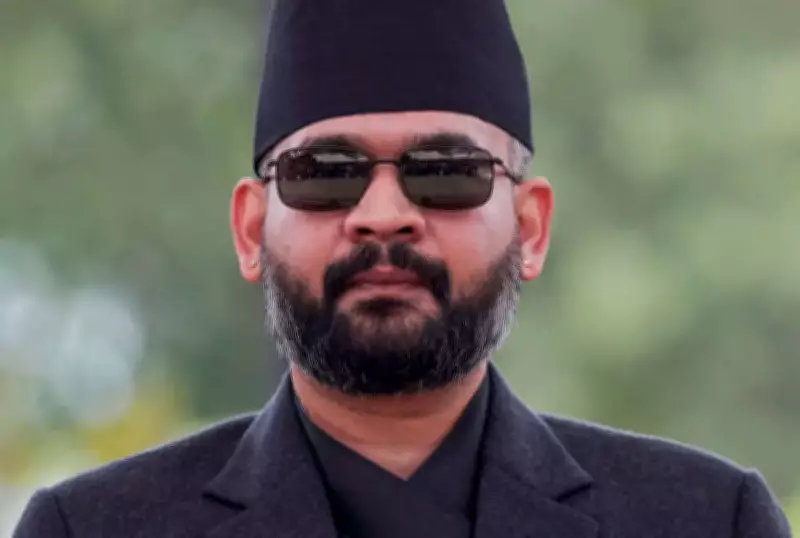
The Supreme Court of Nepal has stayed the government of Prime Minister Balendra Shah's decisions to dissolve civil service trade unions and student organizations in universities, delivering the sharpest legal setback to Shah in his first 45 days in office. The measures were pushed through via ordinances.
Court Orders Amid Protests
The twin orders from the Supreme Court came as employee and student groups took to the streets in protest. Days earlier, the top court had also restrained the government from evicting landless squatters and informal settlers without due process and rehabilitation safeguards.
Shah's Defense
In a social media post, Shah defended the measures, stating, "Banning party flags in schools and bureaucracy will not seize the rights of students and employees, but strengthen professional freedoms." He argued that the move aimed to end partisan influence in education and bureaucracy, where student and employee organizations had become "sleeper cells" of political parties. He added that transfers and promotions should be guided by procedure, competence, and delivery, not party affiliation.

Rejection by Employee and Student Leaders
Employee and student leaders rejected this argument. Uttam Katwal, chairman of the Nepal Civil Service Employees' Association, said it was wrong to describe registered trade unions as party-based bodies. "We are not party-based trade unions; we are civil servants working as the permanent government, having taken an oath in the name of the state," he said.
Student leaders also said the government should regulate campus politics rather than abolish student bodies. Lokesh Kumar Khadka, president of the Free Student Union at Ratna Rajyalaxmi Campus, said, "All the student unions condemn this decision; this is completely wrong." He accused Shah of showing a "dictatorial nature" by denying space for political ideology in universities. Samic Badal, former chairman of the All Nepal National Free Students Union (UML), said, "Cutting off the neck is not a cure for dandruff on the scalp."
Gen Z Activist Perspective
Majid Ansari, a Gen Z activist and final-year law student who petitioned in the eviction case, told TOI that reforms must focus on ordinary citizens. "Laws should be made delivery-oriented and state authorities should be restructured from the ordinary people's point of view. Overall reform is about easing governance and making public services accessible," he said.
Eviction Drives Criticized
Eviction drives have been central to Shah's politics since his tenure as Kathmandu mayor, when his administration repeatedly used bulldozers to clear settlements and structures it described as encroachments. As prime minister, he revived that approach through a nationwide anti-encroachment push. However, landless groups and rights activists said the government had moved against some of Nepal's poorest residents without proper identification, consultation, or a credible rehabilitation plan. Experts from the United Nations and several human rights organizations, including Amnesty International, have criticized the eviction campaigns.
Another Gen Z activist and lawyer, Tanuja Pandey, who was among petitioners against the eviction drive, told TOI, "We have filed a petition saying that the decision to remove the squatters without consulting the affected families and providing safe rehabilitation is illegal." He criticized the bulldozer action, saying poor people living under tarpaulins along riverbanks were being branded "illegal squatters," while ministers and lawmakers occupying public land and running businesses through political influence are the "real squatters."
Shah's 45-Day Scorecard
During his first 45 days in office, Shah faced multiple challenges:

- Civil service employees protested the ordinance-backed move to dissolve trade unions.
- Student groups hit the streets against the order to scrap campus political organizations.
- Landless squatters and informal settlers protested bulldozer evictions from riverbanks and public land.
- Border traders and shoppers protested stricter customs checks on Indian goods above NPR 100.
- Home Minister Sudan Gurung resigned amid wealth scrutiny and public pressure.
- Labour Minister Dipak Kumar Sah was dismissed over nepotism allegations.
- The opposition attacked the ordinance route after eight ordinances reached Parliament.
- 1,200 political appointees were removed, triggering administrative disruption.





