

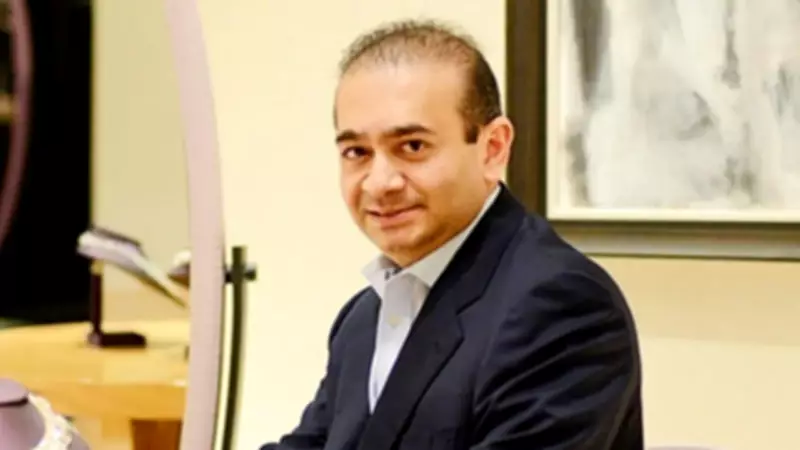
Nirav Modi Seeks European Court Intervention to Halt Extradition to India
Fugitive diamond merchant Nirav Modi has lodged a critical application with the European Court of Human Rights (ECtHR) in Strasbourg, France, seeking an injunction to block his removal to India. This legal maneuver comes after the London High Court dismissed his bid to reopen his original appeal against extradition on March 25, leaving the 55-year-old with limited options in the United Kingdom.
Legal Proceedings and the Rule 39 Application
A spokesperson for the Crown Prosecution Service confirmed to media outlets that "Nirav Modi is due to be removed but he has lodged a rule 39 application to stay his removal to the ECtHR." The agency clarified it is not directly involved in this international legal process. Modi, accused of defrauding Punjab National Bank of over $1 billion, now faces the possibility of extradition within 28 days from March 15, unless the ECtHR intervenes.
According to extradition barrister Ben Keith of 5 St Andrew’s Hill, the Rule 39 application is processed entirely in writing, with no formal hearing. "It will go to a judge in the ECtHR who will usually make a decision within 48 hours," Keith explained. "They might ask the UK government for more information, in which case it could take longer. There is no strict time limit." The UK government has committed not to remove Modi while an ECtHR judge is considering such an application.

Low Success Rate and Potential Delays
Rule 39 interim measures are designed to prevent irreversible harm while a case is ongoing, but they do not determine the final outcome. Keith noted that these applications are rarely successful. In 2025, out of 2,701 requests submitted to the ECtHR, only 222 were granted, highlighting the stringent criteria for approval.
If the injunction is granted, extradition would be halted, and the case would proceed to a main hearing. "This can take three to five years to conclude," Keith stated, adding that in-person hearings are uncommon. During this phase, both sides would submit full pleadings, and a panel of judges would assess whether a human rights violation has occurred.
Background and Implications
Nirav Modi's legal troubles stem from allegations of a massive banking fraud in India, which has drawn significant international attention. His application to the ECtHR represents a last-ditch effort to avoid facing trial in his home country. The process involves demonstrating that his client faces an imminent risk of irreparable harm and has exhausted all domestic legal remedies.
The outcome of this application could have far-reaching implications for extradition cases involving high-profile individuals and human rights considerations. As the ECtHR deliberates, the financial and legal communities are closely monitoring developments, given the scale of the alleged fraud and the prolonged nature of international legal proceedings.






