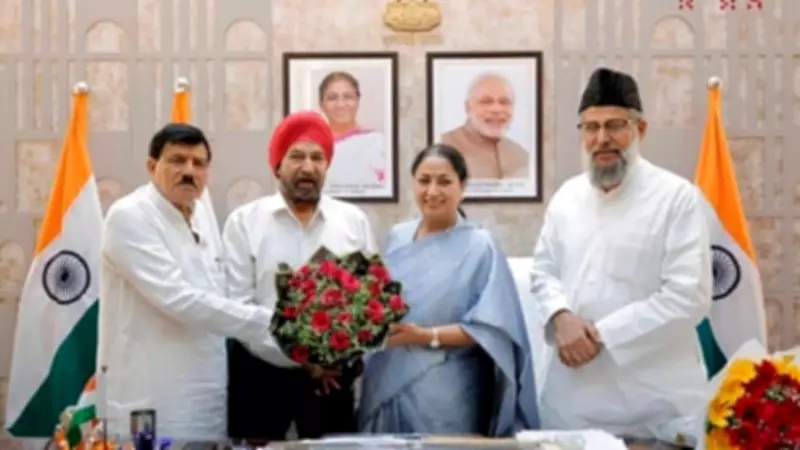
Former Delhi mayor Nirmal Jain has been appointed as the chairperson of the Delhi Minorities Commission, becoming the first non-Muslim to lead the body since its inception in 2000, according to an official statement from the Delhi government on Saturday.
Appointment marks historic shift
Jain, a prominent figure in Delhi's civic administration, takes over the role amid discussions on minority representation in the capital. The commission, formed under the Delhi Minorities Commission Act, 2000, had previously been headed exclusively by Muslim members. The decision to appoint Jain was confirmed by the Delhi government's Department of Social Welfare, which oversees the commission's functioning.
"This appointment reflects the inclusive approach of the government, ensuring that all communities are represented in bodies meant to safeguard minority interests," said a senior official from the Delhi government, speaking on condition of anonymity. The commission is tasked with monitoring the implementation of minority welfare schemes and addressing grievances related to minority communities in Delhi.

Background of the commission
The Delhi Minorities Commission was established to advise the government on policies for minority communities, which include Muslims, Christians, Sikhs, Buddhists, Jains, and Parsis under the National Commission for Minorities Act. Over the past 26 years, the commission has had multiple chairpersons, all from the Muslim community. Jain's appointment breaks this tradition, signaling a broader interpretation of minority representation.
Jain, who served as mayor of Delhi from 2022 to 2023, is known for his work in urban development and municipal reforms. His tenure as mayor saw initiatives in waste management and green spaces. His appointment to the Minorities Commission is seen as a move to bring administrative experience to the body.
Reactions and implications
Reactions to the appointment have been mixed. Some minority rights activists have expressed concern that the commission might lose its focus on Muslim-specific issues, as Muslims constitute the largest minority group in Delhi. However, others have welcomed the decision as a step toward secular governance. "This is a progressive step. The commission should represent all minorities, and a non-Muslim chairperson can bring a balanced perspective," said social activist Ramesh Gupta.
The commission's terms of reference include reviewing the implementation of the 15-point programme for minorities, monitoring the working of the Delhi Waqf Board, and addressing issues of discrimination. With Jain at the helm, the commission is expected to continue its mandate under new leadership.