Noida Court Grants Anticipatory Bail to Lotus Greens Founder in Engineer's Death Case
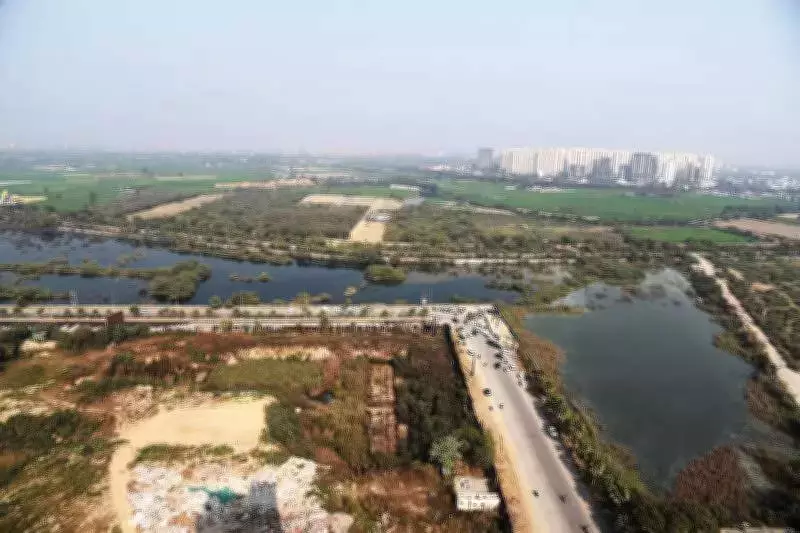
In a significant legal development, an additional sessions court in Noida granted anticipatory bail on Thursday to Lotus Greens founder Nirmal Singh. Singh is named in a First Information Report (FIR) concerning the tragic death of software engineer Yuvraj Mehta, who lost his life in a waterlogged pit in Sector 150 on January 17.
Background of the Case and Legal Proceedings
Nirmal Singh had been untraceable since January 23, following the issuance of a non-bailable warrant against him. His legal team presented arguments in court, asserting that the FIR and accompanying investigation materials did not reveal any cognizable offence directly implicating Singh. The lawyers emphasized that arrests should not be employed as a routine measure in such circumstances.
Singh faces serious allegations under multiple legal frameworks, including:

- The Environment Protection Act, 1986
- The Water (Prevention and Control of Pollution) Act, 1974
- BNS sections 290 (negligence in building construction or demolition)
- BNS section 270 (public nuisance)
- BNS section 125 (negligence endangering human life)
Court's Rationale for Granting Bail
Judge Atul Srivastava, while granting relief, meticulously considered several critical factors. The judge noted the specific facts and circumstances of the case, the nature of the accusations, the prescribed punishment, the absence of prima facie involvement, and the fact that no recovery was required from the applicant. Based on this comprehensive assessment, the court deemed it appropriate to extend the "protective umbrella of anticipatory bail" to Singh.
The court imposed specific conditions as part of the bail order:
- Singh is prohibited from directly or indirectly inducing or threatening anyone connected with the case to prevent them from disclosing facts to the court.
- Foreign travel is restricted without prior permission from the court.
- In the event of arrest, Singh is to be released on a personal bond of Rs 30,000, supported by two sureties of the same amount.
Arguments from Both Sides
Singh's counsel argued vigorously, stating that employees of M/s Lotus Green Constructions Private Limited had been "illegally implicated and arrested" but were subsequently granted bail. The lawyer further highlighted that the investigating officer was extensively examined by the Chief Judicial Magistrate (CJM) court, with no satisfactory material emerging to demonstrate Singh's direct involvement in the incident.
In opposition, District Government Counsel Brahmjeet Singh contended that the developer did not merit bail, emphasizing the gravity of the allegations and the tragic outcome of the incident.
Key Observations by the Court
The judge made several crucial observations during the proceedings. A primary issue examined was how accumulated water could have been drained when construction and related activities had been explicitly restrained by the Noida Authority itself. The court noted that, under such circumstances, it could not be inferred at this stage that Singh intentionally allowed water to accumulate.
Furthermore, the court recorded that Singh was not the owner, director, or person-in-charge controlling the company at the relevant time. It was established that the firm had transferred 70% of its shares and 100% of beneficial and voting rights to Wiz Town, with all statutory information duly furnished to the concerned ministry. The court also found that Singh had neither actual nor constructive possession, nor effective dominion over the land where the unfortunate accident occurred.
This case continues to unfold, highlighting complex legal and environmental issues in urban development contexts.