Nuh Court Delivers Landmark Verdict in Cow Slaughter Case
A special court in Nuh district has handed down a significant judgment, sentencing three individuals to five years of rigorous imprisonment in a high-profile 2020 case involving cow slaughter and illegal meat storage. The case was originally registered at the Firozpur Jhirka police station, marking another conviction under Haryana's stringent cattle protection laws.
Court Convicts Under Haryana's Gau Samvardhan Act
On Thursday, Additional Sessions Judge Shashi Chauhan pronounced the verdict, convicting the accused under the provisions of the Haryana Gauvansh Sanrakshan and Gau Samvardhan Act, 2015. In addition to the prison term, each convict has been fined Rs 75,000. The court specified that failure to pay the fine would result in an additional six months of simple imprisonment.
Details of the Arrest and Evidence
According to police records, the Firozpur Jhirka police team arrested three individuals on September 3, 2020. The arrested persons were identified as Asif (son of Akhtar), Aas Mohammad (son of Shadi Khan), both residents of Madaribas in Sakaras, and Ejaz Anjaz (son of Ramzan), a resident of Hasanpur Bilonda.

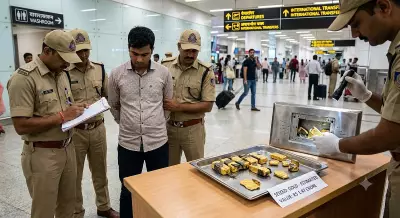
During the arrest, police recovered substantial evidence including approximately 200 kilograms of fresh beef. Additionally, authorities seized a weighing machine, a wooden block, multiple knives, and an axe from the possession of the accused. Police investigations revealed that the men were allegedly involved in slaughtering cattle and storing the meat for commercial sale purposes.
Case Proceedings and Court's Reasoning
Originally, four individuals were named in the case. However, proceedings against one accused, Akhtar (son of Ishaq), were formally dropped on October 15, 2024, following his death.
During the sentencing hearing, the convicted individuals pleaded for leniency, citing multiple factors including poverty, responsibility toward elderly parents, and the absence of any prior criminal record. The court, however, rejected these pleas, emphasizing the serious nature of the offense.
In its detailed order, the court noted that the Haryana law, officially notified on November 19, 2015, imposes a complete ban on cow slaughter as well as the sale, storage, transport, or possession of beef. The judgment specifically stated: "The accused were not only involved in slaughtering cattle but also kept 200kg of beef ready for sale, an act that could adversely impact public order."
Police Response and Broader Legal Context
Nuh police authorities welcomed the judgment, describing it as a strong message against illegal cow slaughter and the beef trade in the region. A police spokesperson commented: "The conviction was secured due to strong evidence presented during the trial."
This case occurs within a broader legal context where courts have been pushing for better enforcement of cattle protection laws. In March 2019, a Punjab and Haryana High Court bench led by Justice Mahabir Singh Sindhu had criticized the state government for failing to ensure adequate arrests and convictions in cases registered under the Act. Following these judicial observations, authorities stepped up efforts to improve conviction rates, though numbers have remained relatively low.
Historical Convictions Under the Act
The first conviction under the Haryana Gauvansh Sanrakshan and Gau Samvardhan Act occurred in December 2019, when a Faridabad court sentenced three men to three years of rigorous imprisonment for transporting cow skin in 2016. The second conviction followed in July 2022, when a Gurgaon court awarded ten years of rigorous imprisonment to a cow smuggler for firing at a police team in 2020.
Between 2022 and 2025, courts in Nuh district have recorded convictions in seven cases registered under the Act, making these among the few such cases in Haryana that have successfully reached conviction. This latest verdict adds to that growing tally, reflecting continued judicial attention to violations of cattle protection legislation in the state.