A recent report has laid bare the alarming state of religious sites belonging to minority communities in Pakistan, revealing a picture of severe neglect and state apathy. The findings indicate that out of a total of 1,817 Hindu temples and Sikh gurdwaras across the country, a mere 37 are currently operational. This stark statistic underscores the ongoing challenges faced by religious minorities in the Islamic Republic.
Shocking Numbers Reveal Systemic Neglect
The data, compiled from official records and presented in the country's parliament, paints a grim picture. In the province of Punjab, which has a significant minority population, only 13 temples and gurdwaras are functional out of 1,356. The situation is even more dire in Sindh, where just 20 are operational from a total of 310. Other regions, including Khyber Pakhtunkhwa, Balochistan, and the federal capital territory, have only four functional sites combined.
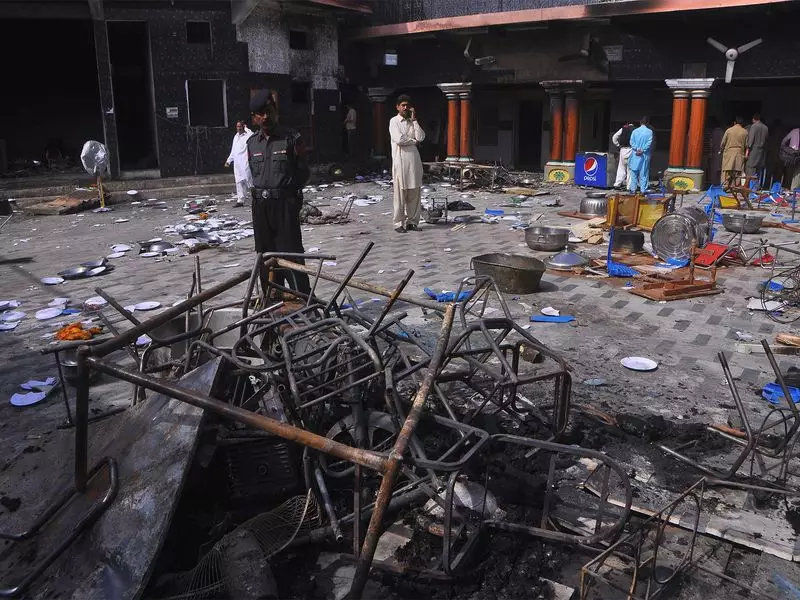
This widespread closure and dilapidation are not accidental. The report explicitly points to "state apathy" as a primary cause. Many of these sacred sites have been illegally occupied, vandalized, or left to crumble due to a lack of protection and maintenance from the authorities. The functional ones often struggle with inadequate resources and face constant pressure.
Contrast with Treatment of Islamic Sites
The report draws a sharp and critical contrast with the state's management of Islamic religious sites. It highlights that while the government actively maintains mosques and other Muslim holy places, it has consistently failed to provide similar care, funding, or legal protection for the places of worship of Hindu and Sikh citizens. This discriminatory approach is seen as a violation of the constitutional guarantees of religious freedom and equal rights for minorities.
Furthermore, the investigation reveals that the Evacuee Trust Property Board (ETPB), the federal body responsible for managing minority religious properties, has been largely ineffective. Critics accuse the ETPB of mismanagement and of failing in its core duty to preserve these cultural and religious heritage sites, many of which hold deep historical significance for the Hindu and Sikh communities, both within Pakistan and in the diaspora.
Broader Implications for Minority Rights
The condition of these temples and gurdwaras is a powerful symbol of the broader socio-political climate for minorities in Pakistan. Activists and community leaders have long argued that the systematic erosion of their religious spaces is part of a larger pattern of discrimination, forced conversions, and economic marginalization. The report's publication has reignited demands for urgent government action.
Calls are growing for the Pakistani state to not only restore and protect these 1,817 sites but also to enact stronger laws against the encroachment and desecration of minority religious properties. International human rights organizations are likely to scrutinize these findings closely, adding to the pressure on Islamabad to uphold its commitments to protect all its citizens' rights, irrespective of faith.
The revelation that over 98% of these historic shrines are non-operational serves as a sobering reminder of the fragile existence of minority communities in the region. It raises critical questions about pluralism, heritage conservation, and the practical implementation of equality before the law in Pakistan.