
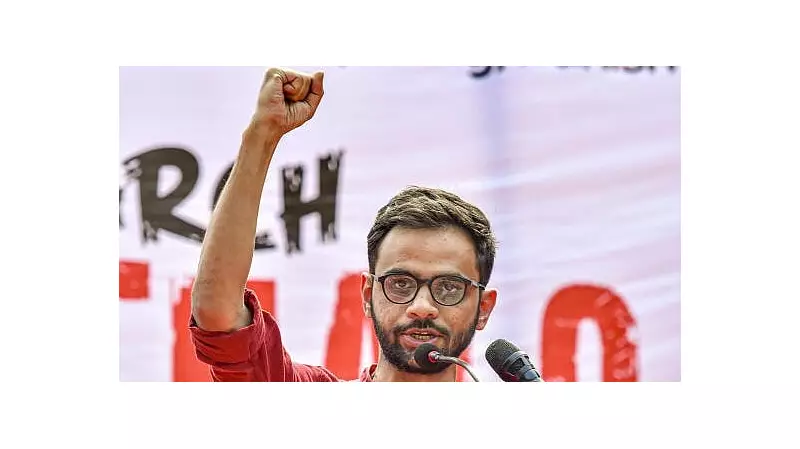
The political opposition in India has raised pointed questions over the judicial system's handling of high-profile cases, spotlighting the stark contrast between the denial of bail to activists Umar Khalid and Sharjeel Imam and the repeated parole granted to convicted Dera Sacha Sauda chief Gurmeet Ram Rahim Singh. This comparison has ignited a fresh debate on the application of legal principles and potential biases within the framework of law and order.
Contrast in Judicial Outcomes Sparks Debate
At the heart of the controversy lies the prolonged incarceration of former JNU student leader Umar Khalid and activist Sharjeel Imam. Both have been in jail for over three and a half years, charged under the stringent Unlawful Activities (Prevention) Act (UAPA) in a larger conspiracy case related to the February 2020 Delhi riots. Despite multiple bail hearings, their pleas have been consistently rejected by various courts, with the latest denial coming from the Delhi High Court for Khalid on July 9, 2024.
In sharp contrast, Gurmeet Ram Rahim Singh, the chief of Dera Sacha Sauda, was granted a 15th parole on July 10, 2024. Singh is serving a 20-year sentence for the rape of two female disciples and was also convicted for the murder of a journalist. His frequent release on parole, now totaling 15 times since his conviction in 2017, has been a subject of intense scrutiny and criticism from various quarters.
Political Leaders Voice Their Concerns
Prominent opposition leaders have been vocal in highlighting this disparity. Congress leader Rahul Gandhi took to social media to question the rationale behind keeping Khalid and Imam in jail without trial while a convicted rapist and murderer is repeatedly released. He framed it as an issue of justice and the government's priorities.
Similarly, Delhi Chief Minister and Aam Aadmi Party (AAP) national convener Arvind Kejriwal echoed these sentiments. He directly questioned the logic of the system that denies bail to individuals charged under UAPA, where the trial has not concluded for years, yet readily grants parole to a convict serving time for heinous crimes. CPI(M) leader Sitaram Yechury also joined the chorus, demanding answers on the parameters used for granting parole to Singh so frequently.
The opposition's argument hinges on the principle of "bail is the rule, jail is the exception", a cornerstone of Indian jurisprudence. They contend that the prolonged pre-trial detention of Khalid and Imam under the UAPA, which makes securing bail exceptionally difficult, violates this principle and their fundamental rights.
Legal Framework and Official Responses
The cases operate under different legal statutes, which authorities cite to explain the differing outcomes. The UAPA, under which Khalid and Imam are charged, is an anti-terror law with stringent provisions. Courts are often reluctant to grant bail in such cases, citing the gravity of the allegations and the nature of the chargesheet, which claims a larger conspiracy.
On the other hand, parole is a provision under prison rules, allowing temporary release on grounds like good conduct, family emergencies, or farming activities. The Haryana government and prison authorities have stated that Singh's paroles have been granted as per rules, for specified periods and reasons. However, the frequency and pattern of these releases have led to allegations of preferential treatment, given the Dera chief's significant political influence in certain regions.
The debate transcends individual cases and touches upon broader themes of judicial discretion, equality before law, and the use of stringent laws. Critics argue that laws like the UAPA are being used to keep dissenters in prolonged detention without conviction, while those convicted of serious crimes manage to secure regular relief. This, they claim, creates a perception of a two-tiered justice system.
As the political discourse intensifies, the spotlight remains firmly on the courts and the executive. The ongoing legal battles of Umar Khalid and Sharjeel Imam, and the parole pattern of Gurmeet Ram Rahim Singh, have become emblematic of a larger contest over the nature of justice and its administration in the country. The outcomes will likely have lasting implications for India's legal and political landscape.