

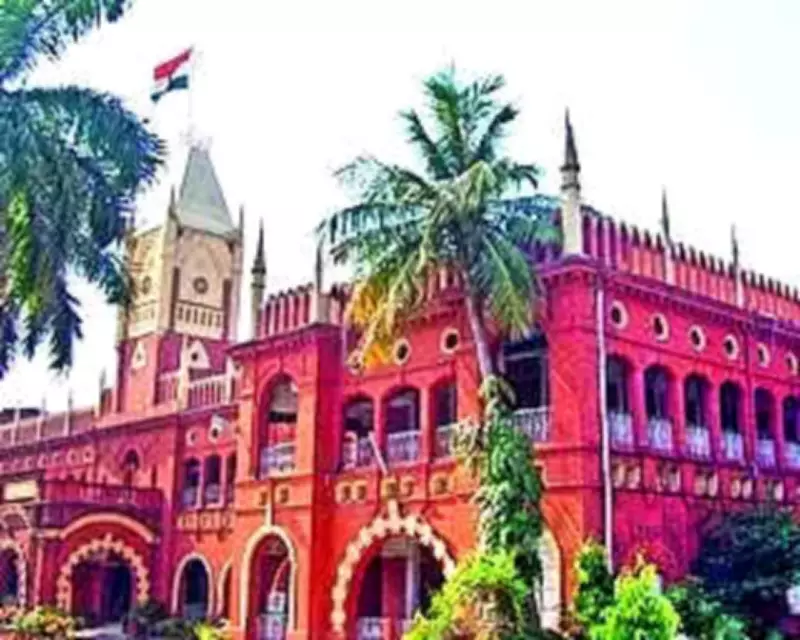
Orissa High Court Declares OPSC Medical Officer Recruitment Advertisement Illegal for Exceeding 50% Reservation Cap
The Orissa High Court has delivered a landmark judgment, holding that the Odisha Public Service Commission's (OPSC) advertisement for medical officer recruitment for the 2024–25 period violated the constitutional 50% ceiling on reservations. The court's ruling came while hearing a writ petition filed by 82 applicant doctors who challenged the recruitment process initiated through an advertisement issued on March 18, 2025.
Court's Scrutiny Reveals Significant Imbalance in Vacancy Distribution
A single judge bench of Justice Biraja Prasanna Satapathy meticulously examined the distribution of vacancies advertised by OPSC. The court noted that the advertisement earmarked only 411 posts for unreserved (UR) candidates, while allocating a staggering 4,837 posts to reserved categories. This breakdown included 736 positions for Socially and Educationally Backward Classes (SEBC), 920 for Scheduled Castes (SC), and 2,481 for Scheduled Tribes (ST) out of a total of 5,248 vacancies.
Senior advocate Buddhadev Routray, representing the petitioners, argued persuasively that the advertisement disproportionately increased reserved category vacancies compared to the 411 unreserved posts, thereby violating established reservation norms and constitutional principles.

Legal Foundation: Supreme Court Precedent Cited
In the March 17 judgment, Justice Satapathy observed, "Since in the impugned advertisement while advertising 411 posts for UR category, vacancies for reserved category candidates have been indicated at 4,837 and the same admittedly exceeds the 50% ceiling, in view of the decision of the Supreme Court, it is the view of this court that such an advertisement could not have been issued." The court specifically referenced the landmark Supreme Court case Indra Sawhney v. Union of India, which established the 50% reservation ceiling that has guided reservation policy for decades.
State's Healthcare Crisis Creates Complex Legal Dilemma
The court had previously allowed the selection process to continue but restrained its finalization. However, the state's advocate general Pitambar Acharya presented a compelling counter-argument, emphasizing that Odisha is facing a severe and acute shortage of doctors. He urged the court to permit completion of the recruitment process to address this critical healthcare emergency.
Senior advocate P K Mohanty, representing OPSC, provided additional context, explaining that the advertisement was based on a government requisition citing 4,919 backlog vacancies and 329 non-joining vacancies. He further revealed that the recruitment process had already been completed, but the results were withheld due to the court's interim order.
Balancing Act: Court Permits Partial Appointments Amid Healthcare Crisis
Taking serious note of what it described as a "crunch situation" in Odisha's healthcare sector, Justice Satapathy demonstrated judicial pragmatism. The court vacated the interim order and permitted OPSC to recommend 411 UR candidates along with an equal number of 411 reserved category candidates. These reserved category appointments were to be made proportionately according to the percentage of reservation meant for each reserve category.
Furthermore, the court allowed the health department to fill the reserved category positions from the backlog vacancies after receiving recommendations from the commission. This nuanced approach attempted to balance constitutional principles with practical healthcare needs.
Broader Implications for Reservation Policy and Healthcare Recruitment
This judgment has significant implications for reservation policy implementation across India, particularly in sectors facing critical shortages of professionals. The court's decision reinforces the constitutional limit on reservations while acknowledging the practical challenges states face in filling essential positions. The case highlights the ongoing tension between affirmative action principles and urgent administrative needs in vital public services like healthcare.

The ruling serves as an important reminder to all public service commissions and government recruitment bodies about the necessity of adhering to constitutional reservation limits, even when addressing pressing shortages in essential services. It establishes a precedent for how courts might approach similar conflicts between legal principles and practical exigencies in the future.





