

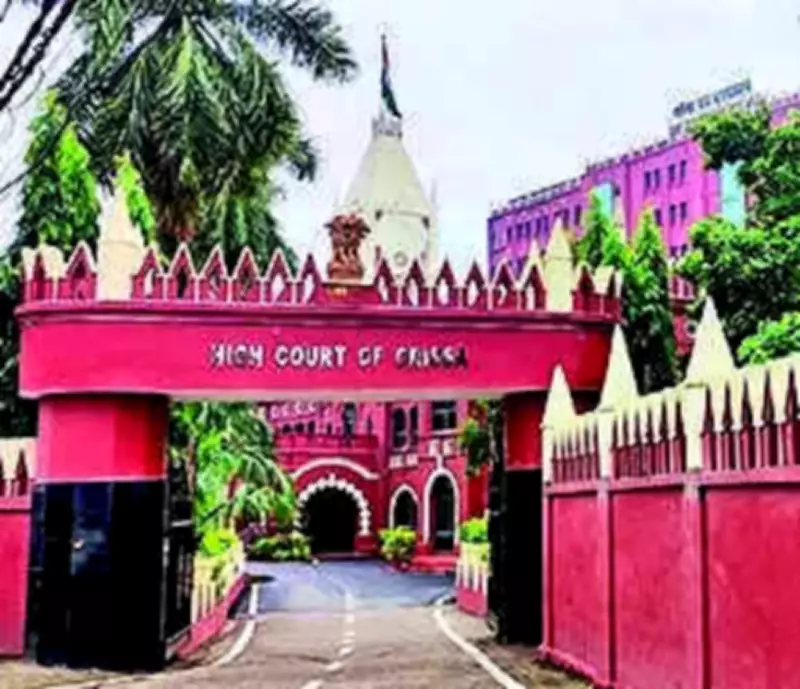
The Orissa High Court has expressed serious concern over the prolonged delay in a vigilance corruption case pending for over a decade, observing that investigative inertia infringes upon the accused's right to speedy justice and weakens public confidence in the criminal justice system.
Court Directs Vigilance to Submit Final Report
Disposing of a petition filed by a tehsildar and an amin of Barang tehsil seeking quashing of criminal proceedings, Justice S K Panigrahi on May 22 directed the Vigilance department to submit the final report before the special judge (Vigilance), Bhubaneswar, within eight weeks. The judgment's web copy was released on May 27. The court also instructed the trial court to proceed with the matter expeditiously thereafter.
Justice Panigrahi observed: "Investigative lassitude erodes public trust in the criminal justice delivery system. Such delay not only defeats the rights of the accused to a speedy trial but also undermines the profound societal interest in the effective prosecution of corruption offences."

Background of the Case
The case stemmed from allegations that the two revenue officials demanded a bribe of Rs 4 lakh from the complainant, with Rs 50,000 as the first instalment. Acting on the complaint, Vigilance officials organized a trap operation. Investigators alleged that the complainant handed over Rs 50,000 to the amin on the instructions of the tehsildar. However, the trap did not yield recovery of the tainted currency notes.
Following investigation, the Vigilance department filed a final report in December 2016, stating that no prima facie case could be established because the money was not recovered and there was no corroboration from overhearing the witness.
Procedural Stagnation
The matter took a different turn in December 2017 when the special judge (Vigilance) refused to accept the closure report and directed further investigation. What followed, the High Court noted, was years of procedural stagnation. Court records showed that despite repeated directions from the trial court, the investigating agency failed to submit a fresh final form for a considerable period.
Justice Panigrahi observed: "The record reveals a pattern of repeated adjournments and prolonged pendency without the submission of a final report. Such institutional inaction undoubtedly merits serious judicial concern." He underscored that Article 21 of the Constitution guarantees not only a fair trial but also a fair and expeditious investigation.
The Judge said that corruption cases involving public servants demand prompt action because they directly affect trust in governance and institutional integrity.






