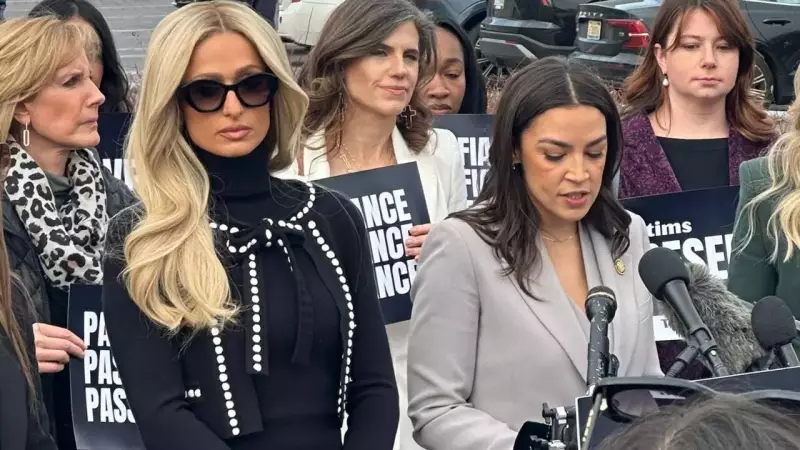
Paris Hilton Testifies Before Congress, Urging Passage of Defiance Act to Combat Deepfake Pornography
The former reality television star and entrepreneur, Paris Hilton, made a compelling appearance on Capitol Hill this week, passionately advocating for the House to pass the Defiance Act. This critical legislation aims to provide victims of deepfake pornography with the legal right to sue individuals who create and distribute such nonconsensual content. Hilton's advocacy is deeply personal, stemming from her own traumatic experience of having intimate images shared without her consent when she was younger.
A Personal Plea Rooted in Past Trauma
"When I was 19 years old, a private intimate video of me was shared with the world without my consent," Hilton stated emotionally during her testimony. She appeared alongside a bipartisan coalition of congresswomen, including the bill's lead sponsors, Representatives Alexandria Ocasio-Cortez (Democrat-New York) and Laurel Lee (Republican-Florida).
Hilton reflected on the profound impact of that violation, noting, "People called it a scandal. It wasn't. It was abuse. There were no laws at the time to protect me. There weren't even words for what had been done to me. The internet was still new, and so was the cruelty that came with it."

The Defiance Act: A Legislative Response to Digital Abuse
The Defiance Act represents a significant step forward in addressing the growing menace of digitally manipulated explicit content. If enacted, it would grant victims a civil right of action, enabling them to pursue lawsuits against perpetrators who produce and disseminate deepfake pornography. This bill follows the passage of the Take It Down Act last year, which made the publication of nonconsensual sexually explicit deepfakes a federal crime.
The recent legislative push for the Defiance Act coincides with a disturbing surge in sexualized AI-generated images on social media platforms, particularly on Elon Musk's X. Reports indicate that Musk's AI chatbot, Grok, which is integrated into X, produced thousands of sexualized images of women and children in recent weeks in response to user prompts.
Tech Platform Responses and Ongoing Challenges
In response to the controversy, X has implemented several restrictions. The platform has barred all users from using Grok to edit images of real people in revealing clothing and has geoblocked the generation of such images in jurisdictions where it is illegal. Additionally, image editing and generation tools on X are now restricted to paid subscribers only.
Despite these measures, Hilton emphasized the escalating nature of the threat. "Today, what happened to me then is happening now to millions of women and girls in a new and more terrifying way," she declared. "Before, someone had to betray your trust and steal something real. Now, all it takes is a computer and a stranger's imagination. Deepfake pornography has become an epidemic."
Bipartisan Support and Legislative Progress
The Defiance Act has garnered substantial bipartisan backing, having cleared the Senate last week with unanimous support. Representative Alexandria Ocasio-Cortez expressed optimism about the bill's prospects in the House, stating that lawmakers have had "positive and encouraging conversations" with Speaker Mike Johnson (Republican-Louisiana) about scheduling a vote "as quickly as possible."
Hilton's advocacy is not her first foray into legislative matters. She previously appeared on Capitol Hill to support a youth welfare bill, demonstrating her ongoing commitment to using her platform for social and legal reform. Her testimony underscores the urgent need for updated laws to protect individuals in the digital age, where technology can be weaponized to inflict profound harm.
As the debate continues, the Defiance Act stands as a pivotal piece of legislation in the fight against digital exploitation, offering hope for stronger legal protections for victims of deepfake pornography across the nation.