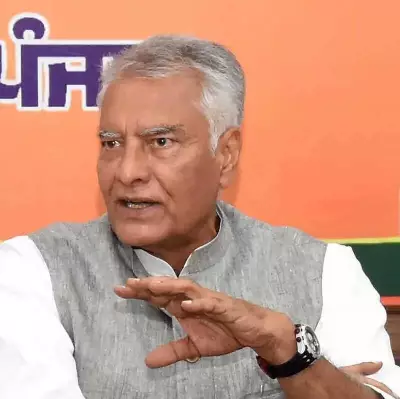
In a significant development for police practices in Gujarat, three districts under the Junagadh Range have witnessed a sharp 34 percent decline in preventive detentions over two years. This drop follows a landmark order issued by Inspector General of Police (IGP) Nilesh Jajadia in August 2023, which restricted the overnight locking up of individuals with no criminal history.
The Directive and Its Immediate Impact
The data, obtained from the Junagadh Range police, tells a compelling story. Between January and October 2024, a total of 7,223 people were placed under preventive detention in the districts of Porbandar, Gir Somnath, and Junagadh. In the same ten-month period of 2025, that number plummeted to 4,765 – a reduction of 2,458 cases or 34 percent. The month of October alone saw detentions fall from 441 in 2024 to 329 in 2025, a decrease of 25 percent.
This trend is a direct outcome of IGP Jajadia's order dated August 8, 2023. The directive explicitly instructed Station House Officers (SHOs) to avoid keeping people in police lockups overnight unless in exceptional, exigent circumstances. Explaining the human-centric rationale behind the move, Jajadia stated that innocent individuals, who might act in the heat of the moment without any criminal intent or past record, should be spared the traumatic experience of lockup. He emphasized that such an experience often breeds deep negativity towards the legal system and society at large.

New Checks on a Powerful Police Tool
Preventive detention, a tool allowing police to arrest without a warrant to prevent a cognizable offence, was earlier invoked under Section 151 of the Code of Criminal Procedure (CrPC). It has now been replaced by Section 170 of the Bharatiya Nagarik Suraksha Sanhita (BNSS). Both provisions permit detention for up to 24 hours.
However, Jajadia's order introduced crucial supervisory checks to prevent misuse. The directive mandates that if the conditions for preventive detention are met, officers must first check the person's past record. If the individual has no history of cognizable offences, written permission from a Sub-Divisional Police Officer (SDPO) of DySP/ASP rank is compulsory. Any oral permission must be documented later in the station diary.
To ensure strict compliance, Superintendents of Police (SPs) in the three districts have been ordered to review at least one preventive detention case daily. They are empowered to initiate departmental action against officers found "abusing power" and must submit monthly reports on any violations of the order.
Balancing Reform with Operational Realities
While the reform has shown positive results, it has also sparked a debate within the police force. IGP Jajadia noted that two of the three districts demonstrated "excellent" compliance, while one was a "laggard." Disciplinary action has already been taken against an officer in Keshod.
Some officers expressed concerns about the implementation. A district police chief pointed out a potential worst-case scenario: if police, adhering to the circular, do not act on information about a potential altercation and an incident occurs, the blame would fall on them. They argued that inspectors need discretionary power to act against potential troublemakers.
Dr S Pandia Rajkumar, Additional Director General (ADGP) of Law and Order in Gujarat, provided a balanced perspective. He stated that the provision under BNSS Section 170 must be used judiciously based on the imminent threat of a crime. ADGP Pandian, a former Junagadh Range IG, clarified that the law itself does not link preventive detention to past antecedents. However, he endorsed the circular's balanced approach, stating that seeking SDPO permission for those without a history is a fair safeguard against misuse. The overarching goal, as emphasized by senior officials, is to ensure this powerful tool is applied correctly, not to handicap legitimate police work.