

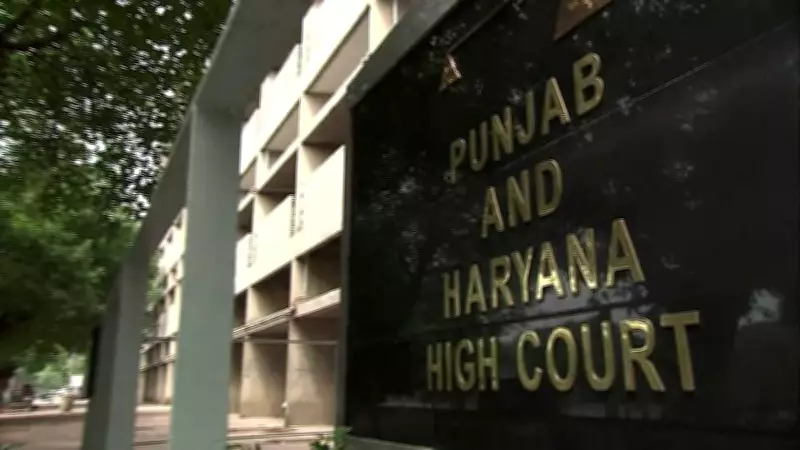
Punjab and Haryana High Court Issues Strict Ban on AI Tools for Judicial Judgments
In a significant directive, the Punjab and Haryana High Court has officially barred all judicial officers from utilizing artificial intelligence tools to write or draft judgments. This move underscores the court's commitment to maintaining human oversight and integrity in the judicial process, amid growing technological advancements.
Registrar-General's Letter Details the Prohibition
A letter issued by the high court's registrar-general explicitly outlines the ban, emphasizing that any violation of these instructions will be viewed seriously. The directive aims to ensure that judicial decisions remain rooted in human reasoning and legal expertise, rather than automated algorithms.
The registrar-general's communication highlights the potential risks associated with AI in legal contexts, such as biases, errors, or lack of transparency, which could compromise the fairness and reliability of judgments. This step reflects a cautious approach towards integrating technology into core judicial functions.

Implications for Judicial Officers and Legal Proceedings
Judicial officers across Punjab and Haryana are now required to adhere strictly to this ban, relying solely on traditional methods for judgment drafting. This decision may impact efficiency but prioritizes accuracy and ethical standards in the legal system.
The high court's stance signals a broader debate on the role of AI in judiciary systems worldwide, balancing innovation with the need for accountability. Officers found using AI tools could face disciplinary actions, as the court intends to enforce this rule rigorously.
- Prohibition applies to all AI-based writing assistants and software.
- Violations will be treated as serious misconduct.
- Directive aims to preserve human judgment in legal decisions.
This development comes as AI technologies become more prevalent in various sectors, prompting legal institutions to reassess their adoption. The Punjab and Haryana High Court's proactive measure sets a precedent for other courts in India to consider similar regulations.






