

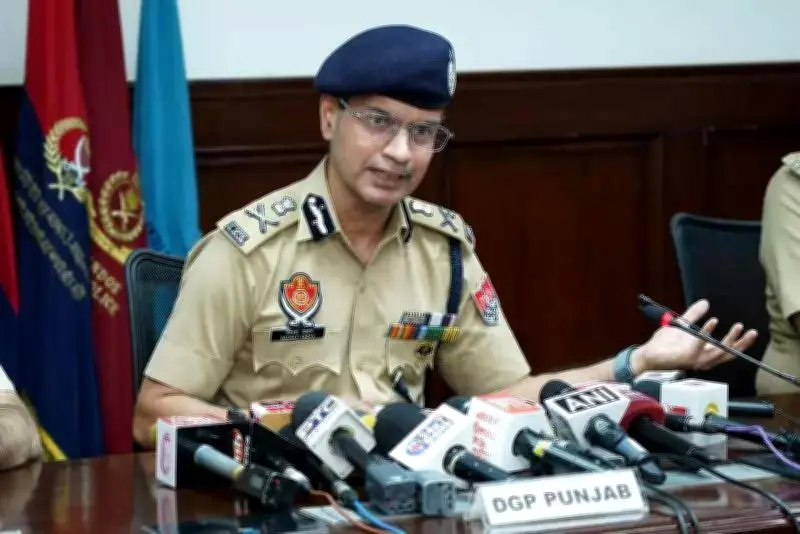
Punjab Moves Forward with Regular DGP Appointment After Supreme Court Push
In a significant development, the Punjab government has finally initiated the process to appoint a regular Director General of Police (DGP), ending a prolonged period of nearly four years with an acting police chief. On Monday, the state submitted a panel of 14 IPS officers to the Union Public Service Commission (UPSC), setting the stage for a formal selection under the Supreme Court-mandated framework.
Supreme Court Directives Trigger Action
This move comes in response to the Supreme Court's firm directions issued on February 5, which criticized several states, including Punjab, for continuing with "acting" DGPs in violation of established norms. The court reiterated the necessity of adhering to the UPSC-led appointment process, as outlined in the landmark Prakash Singh police reforms case. Following the order, the UPSC on February 18 instructed Punjab to submit its proposal within ten days and later issued a reminder when the state failed to comply promptly.
On March 12, the Supreme Court further rejected Punjab's attempt to rely on the Punjab Police (Amendment) Bill, 2023. The state had argued that the matter was pending with the President, but the court dismissed this, emphasizing the urgency of following the prescribed procedure.

Key Contenders and Procedural Adjustments
Among the 14 officers whose names have been forwarded is 1992-batch IPS officer Gaurav Yadav, who has been serving as Punjab's acting DGP since July 2022. Since Yadav is a contender, the UPSC has permitted Punjab to replace him with the state home secretary in the empanelment committee. This committee typically includes the DGP and chief secretary of the concerned state, ensuring impartiality in the selection process.
The UPSC empanelment committee will now shortlist three officers from the panel. The Punjab government will then choose one as the regular DGP. Under the Supreme Court-backed framework, the selected officer is guaranteed a minimum tenure of two years, regardless of their retirement date, promoting stability and independence in police leadership.
Historical Context and Political Dynamics
In 2022, Yadav replaced 1987-batch IPS officer Viresh Kumar Bhawra, who was appointed as regular DGP through the UPSC procedure. Bhawra was selected by the then Congress-led government from a shortlist of three officers in January 2022, just hours before the model code of conduct took effect for the February 2022 Punjab elections. When Yadav was appointed as acting DGP in July by the AAP-led government, he superseded several senior officers, highlighting the political sensitivities involved.
Punjab had been delaying the proposal submission, citing the Punjab Police Amendment Bill (2023) passed by the state assembly. This bill aimed to circumvent the Supreme Court-mandated UPSC process by proposing a state-controlled seven-member committee for DGP selection. However, the Supreme Court's recent rejection has reinforced the need for compliance with the established procedure.
List of Officers Submitted for Empanelment
The 14 IPS officers included in the proposal are:
- 1992-batch: Acting DGP Gaurav Yadav, Special DGP (Punjab Police Housing Corporation) Sharad Satya Chauhan, Special DGP (anti-narcotics task force) Kuldeep Singh, and Harpeeet Singh Sidhu (awaiting posting).
- 1993-batch: Special DGP (community affairs division and women affairs) Gurpreet Kaur Deo, Special DGP (Punjab State Power Corporation Ltd) Jitendra Kumar Jain, Special DGP (railway) Shashi Prabha Dwivedi.
- 1994-batch: Special DGP (headquarters) Sudhanshi Shekhar Srivastava, Special DGP-cum-chief director (vigilance bureau) Praveen Kumar Sinha, Special DGP (traffic and road safety) Aamardeep Singh Rai, Special DGP (cyber crime) Voruvuru Neeraja, Special DGP-cum-director, Maharaja Ranjit Singh Punjab Police Academy (MRSPPA), Phillaur, Anita Punj, Special DGP (human rights) Dr Naresh Kumar, and Special DGP (technical support services) Ram Singh.
This step marks a crucial move towards ensuring transparent and accountable police leadership in Punjab, aligning with judicial mandates for reform.






