

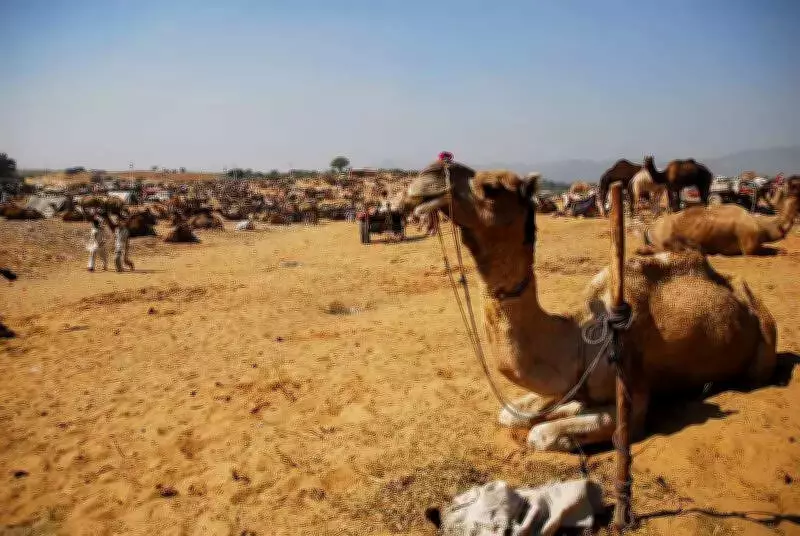
Rajasthan High Court Raises Alarm Over Drastic Decline in State Camel Population
The Rajasthan High Court has voiced significant concern regarding the continuous and severe decline in the population of camels, which hold the esteemed status of the state animal of Rajasthan. The court made a critical observation that the "numbers nearly halved after the enactment of the camel protection law," highlighting a paradoxical outcome where legislative measures intended for conservation appear to have coincided with a sharp reduction.
Court Directs State Government to File Detailed Response
In a decisive move, the court has asked the state government to file its comprehensive response by March 29. This response must thoroughly explain the specific measures and actions required to effectively protect and increase the camel population within the state. The directive underscores the judiciary's insistence on urgent governmental intervention to address this pressing ecological and cultural issue.
Hearing Details and Judicial Remarks
The matter was brought before a division bench comprising Justice Pushpendra Singh Bhati and Justice Vinit Kumar Mathur on March 10. The bench was hearing a suo motu public interest litigation specifically focused on the declining camel population, with a copy of the order being officially uploaded on Sunday. During the proceedings, the court made oral observations expressing dismay that, despite the law enacted for camel protection, the population of this iconic state animal has experienced a sharp and worrying decline.

The Bench emphatically remarked that the "government must take the issue seriously and address the situation," indicating a clear expectation for proactive and serious engagement from state authorities.
Alarming Population Statistics Presented in Court
Amicus Curiae Prateek Kasliwal provided the court with detailed and concerning data regarding the camel population trends. He informed the court that the state government had failed to file its reply in the matter since July 2022, despite earlier directions issued by the court. The statistical evidence presented revealed a steep and consistent decline over the years:
- Rajasthan had approximately 7.5 lakh (750,000) camels in 2004.
- This number declined to 3.26 lakh (326,000) by 2015, the very year the camel protection law was enacted.
- Within just four years, by 2019, the population further dropped to 2.13 lakh (213,000).
- By 2021, the count had fallen to nearly 1.5 lakh (150,000), illustrating a drastic reduction.
Economic Disincentives and Legal Implications
Kasliwal also pointed out a significant unintended consequence of the protection law. Following its enactment, the sale of camels in traditional animal fairs was completely banned. This prohibition, while aimed at conservation, effectively reduced the "economic incentive for livestock owners to rear camels." This economic disincentive has likely contributed to the population decline, as breeders find little financial reward in maintaining camel herds.
Next Steps and Judicial Timeline
The High Court has granted additional time to the state government to prepare and file its detailed response. The matter has been posted for further hearing on March 29. The court's specific instruction is for the state government to explain in its reply concrete strategies and plans on how the camel population can be effectively increased and safeguarded for future generations.
This judicial intervention highlights a critical juncture for Rajasthan's cultural heritage and biodiversity, urging immediate and effective action to reverse the decline of its revered state animal.






