

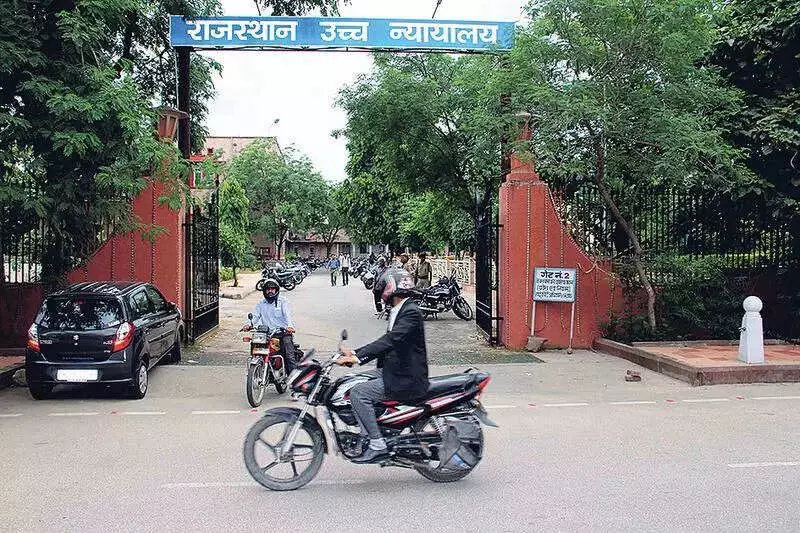
Lawyers in Rajasthan have announced a complete abstention from work at the principal seat in Jodhpur and the bench in Jaipur as the Rajasthan High Court reopens after the winter recess on Monday. This decisive action comes as a protest against the court administration's decision to introduce night courts and implement two working Saturdays every month.
Roots of the Conflict: Unilateral Decision Sparks Outrage
The flashpoint for this confrontation was a decision by the High Court's full court to increase the number of working days starting from January 2026. Bar associations across the state have labeled this move as "impractical" and warned it would be detrimental to the overall justice delivery system.
At the Jaipur bench, the Rajasthan High Court Bar Association (RHCBA) strongly objected, stating the administrative order was issued without any prior consultation with the Bar. The association raised multiple concerns against holding night courts, including:

- Significant security risks for lawyers, staff, and litigants.
- Inadequate infrastructure and lack of proper transport facilities during evening hours.
- Severe accessibility issues for litigants, especially those traveling from distant and remote areas.
Despite submitting a detailed representation to the high court administration on December 19, 2025, the RHCBA has not received any formal response, leading to further frustration.
State-Wide Solidarity: Jodhpur and District Courts Join Protest
The protest is not confined to Jaipur. In Jodhpur, advocates had already announced a voluntary boycott of court work on January 5. Over the weekend, key meetings solidified the state-wide stance.
A joint meeting of the outgoing and newly elected executive committees of both the Rajasthan High Court Advocates' Association, Jodhpur, and the Rajasthan High Court Lawyers' Association, Jodhpur, was held on Saturday. A similar gathering of bar members took place at the Jaipur bench on Sunday.
Both meetings unanimously passed resolutions to oppose the two working Saturdays each month and the proposal to convene evening courts. In a show of collective strength, all subordinate courts in the districts will also join the work boycott.
Broader Concerns: Health, Efficiency, and Work-Life Balance
Legal bodies argue that the increased workload will have severe repercussions. RHCBA president Rajeev Sograwal emphasized that the additional working days would place an undue burden on advocates. He stated this would adversely affect their physical health, mental well-being, and family life, which would ultimately compromise the quality of judicial work presented in courts.
Echoing these sentiments, the Bar Council of Rajasthan also declared night courts unworkable under the existing conditions. The council has urged the high court administration to reconsider its decision, cautioning that the proposed changes could negatively impact advocates' professional efficiency, health, and crucial work-life balance.
The standoff highlights a significant clash between administrative efforts to increase judicial throughput and the practical ground realities faced by the legal fraternity. The reopening of the High Court on Monday is set to begin with empty courtrooms as the protest takes hold.






