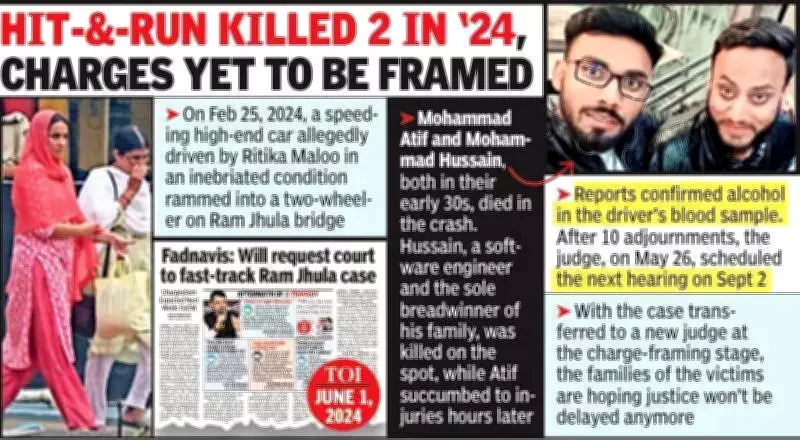
The high-profile Ram Jhula hit-and-run case, in which two young men were killed on February 25, 2024, has been transferred to a new judge after at least 10 adjournments at the charge-framing stage. The next hearing has been scheduled after 100 days, on September 2, causing further distress to the victims' families.
Incident Details
On February 25, 2024, a speeding Mercedes allegedly driven by Ritika Maloo, who was reportedly inebriated, rammed a two-wheeler on Ram Jhula bridge. The victims, Mohammad Atif and Mohammad Hussain Gulam Mustafa, both in their early thirties, died in the crash. Hussain, a software engineer and the sole breadwinner of his family, died instantly, while Atif succumbed to his injuries hours later. Forensic reports confirmed the presence of alcohol in the driver's blood sample.
Judicial Delays
Despite the Nagpur bench of the Bombay High Court ordering a fast-track investigation and transferring the probe to the State CID, the trial has been plagued by inordinate delays. The case remained stuck at the charge-framing stage for seven to eight months, with the court granting more than 10 adjournments, citing a heavy pendency list. The victims' families repeatedly approached the principal district judge and the high court registrar to transfer the case to a less burdened court. Their persistent efforts finally succeeded, and the case has now been reassigned to a new judge in the hope of expediting proceedings.

The families expressed shock over the prolonged wait for justice. Atif's elder brother, Atik, said, "We are getting long dates. Can anyone understand our pain?" The pain was compounded when Hussain's father, Ghulam Mustafa, passed away in March 2024, unable to bear the trauma of the delay. The prosecution plans to request the new court for a day-to-day hearing and pretrial proceedings to prevent further delays.
Broader Implications
Legal experts note that repeated adjournments not only deny timely justice to victims' families but also erode public faith in the judicial system. This case highlights the larger issue of the 'tareekh pe tareekh' culture in overburdened courts, despite clear directives from the high court for a fast-track trial. The families, from economically weaker sections, have been struggling to seek justice.