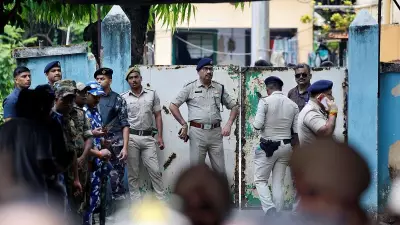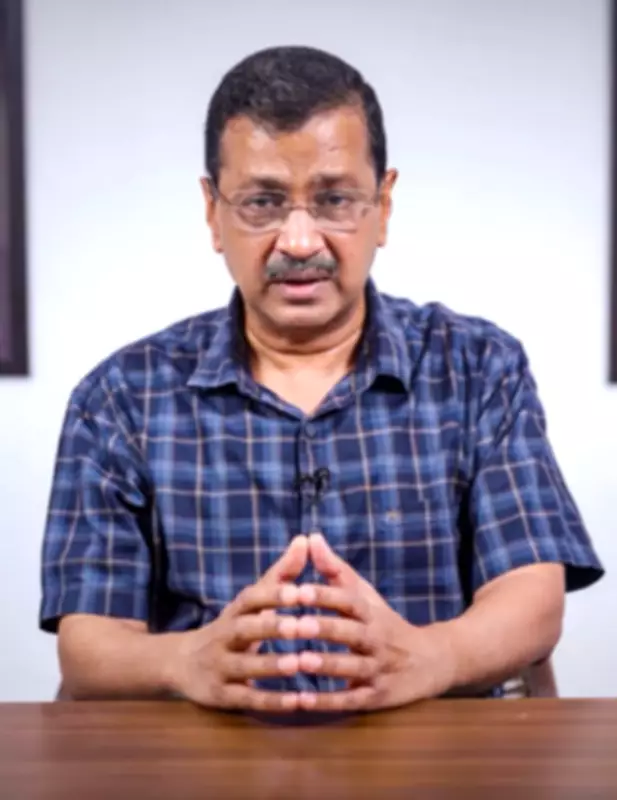
The recusal controversy involving Justice Swarna Kanta Sharma has brought renewed attention to a fundamental principle of the judiciary: justice must not only be done but must also be seen to be done. This issue gained prominence last month when former Delhi Chief Minister Arvind Kejriwal sought the judge's recusal from hearing a case, citing a likelihood of bias. The concern stemmed from the fact that Justice Sharma's children were practicing as panel lawyers in the same court, raising questions about whether this could create a perception of conflict of interest.
Justice Sharma's Response
Justice Sharma, however, refused to step aside, holding that the mere fact that her children practiced in the court was not sufficient ground for recusal. She maintained that there was no bias and that the case could be heard fairly. In response, Kejriwal declared he would not appear before her and withdrew his counsel. Undaunted, the judge decided to proceed with the case in his absence and appointed three senior advocates as amicus curiae.
The Core Question
The central issue here is not whether the judge was actually biased, but whether, in the eyes of a litigant, there existed a reasonable likelihood that the case might not be heard without bias. In such situations, convention has often favored recusal to preserve confidence in the judicial process. The Latin maxim nemo judex in causa sua—meaning no one should be a judge in their own cause—underpins this principle. This concept evolved over time, particularly after English King William III separated the judiciary from executive powers through the Act of Settlement of 1701. However, even after this separation, the judiciary continued to be manned by judges appointed by the state, making it essential that any judge hearing a case is free from partiality or bias.

Constitutional and Ethical Framework
Judges of the higher judiciary, before entering office, take an oath as prescribed under Part III of the Constitution, affirming that they will perform the duties of their office without fear or favor, affection or ill will. The corollary of a judge discharging duties independently is that justice must not only be done but must also appear to be done. Under Rule 6 of the norms established by the Bar Council of India, no lawyer can practice in a court where any of their close relatives serves as a judge. The list of such relatives includes father, grandfather, son, grandson, uncle, brother, nephew, stepbrother, husband, wife, daughter, sister, aunt, niece, father-in-law, brother-in-law, or sister-in-law. However, there has been controversy over whether the term court in this rule refers only to the court of that particular judge or the entire court in which the relative works.
Historical Precedents
In the landmark case S P Gupta vs Union of India (the First Judges Case), a possible solution was suggested to avoid embarrassment. The court said it would take into account the advice of the Chief Justice of India that where close relatives of a judge practice in the same court and may gain undue advantage, the judge should, in keeping with a keen sense of justice, opt to be transferred to another high court. In 1997, all judges of the Supreme Court, under the chairmanship of Chief Justice J S Verma, adopted a resolution on The Values in Judicial Life. This stated that a judge should prohibit close relatives from appearing in their court and that no relative should practice law while residing in the judge's household.
Justice Markandeya Katju, in his judgment in the 2010 Raja Khan case, warned against the dangers of allowing close relatives to practice in the same court. For instance, the Union of India sought the transfer of a suit filed in Amritsar by the Shiromani Gurdwara Parbandhak Committee seeking Rs 1,000 crore in reparation for Operation Blue Star. The Union argued that no court in Punjab would be able to hear the matter dispassionately. The Supreme Court transferred the case to the Delhi High Court, clarifying that such a transfer should not be taken to mean that courts in the state were biased, but that the likelihood of bias was a relevant consideration.

Similarly, the Supreme Court transferred a suit filed by J Jayalalithaa against T N Seshan regarding the release of his biography An Intimate Story by K Govindan Kutty, holding that the matter may not be heard dispassionately in Tamil Nadu. In another instance, a petition by Jayalalithaa raised concerns about whether Seshan, then Chief Election Commissioner, could hear a matter impartially because the petitioner's counsel had professional links with the Election Commission.
Conclusion
In the fitness of things, and considering that there are several judges in the Delhi High Court, Justice Swarna Kanta Sharma could have stepped aside and allowed the matter to be heard by another bench. The principle of nemo judex in causa sua remains a cornerstone of judicial integrity, and the perception of bias is as important as actual bias in maintaining public trust in the judiciary.
Additional Historical Context: Barring Uncles and Aunties
During the early 1980s, this rule came up for interpretation before the Karnataka High Court. Pramila Nesargi, a woman advocate who married Nesargi, a Karnataka High Court judge who had lost his wife, appeared before the court of Justice P P Bopanna. As she was not a senior advocate and her name did not appear in the vakalat filed in the case, the judge directed her to file a vakalat to represent her client. Justice Bopanna ruled that while the Bar Council prohibits a lawyer from appearing in a court where a close relative is a judge, the term court does not necessarily refer to all courts in a high court. He stated, however, that stricter standards should apply in the case of a spouse. A wife has an intimate relationship with her husband. Many matters discussed among judges would reach her ears. When a woman who has access to confidential matters in respect of a court is allowed to practice in the same court as a lawyer, it can spell danger, he said.
Justice Leila Seth, former Chief Justice of Himachal Pradesh, in her autobiography On Balance, recalled her experience in the Patna High Court regarding two kinds of practices adopted by the bar. She described what was known as uncle practice and lal jhanda. I learned that, since a son was not permitted practice in his father's court, if you did not want the matter to be heard by that court, you briefed the son and thus stopped the matter from going before the father; you had put out a 'red flag'. This misuse of a rule that had been incorporated to prevent partisan decisions was apparently quite prevalent, and some young lawyers even managed to make a living out of it. It was also rumored that certain judges favored the sons of their brother judges, and so the 'Uncle Practice' thrived.