Reform UK Candidate's Burqa Comments Ignite Controversy in London
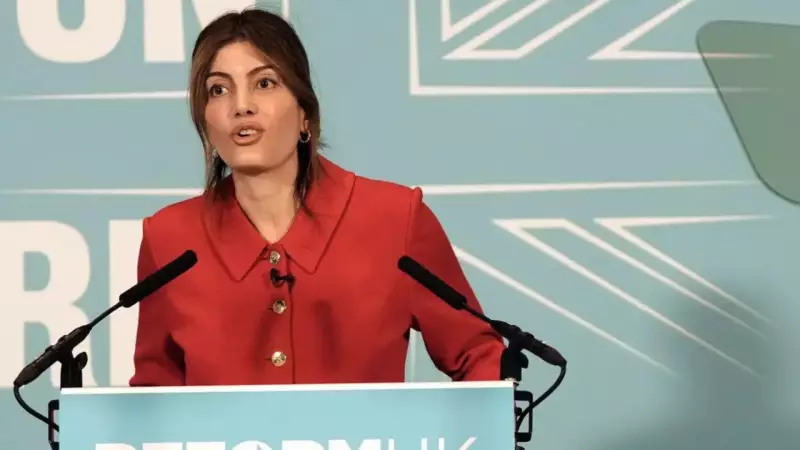
Laila Cunningham, the newly announced Reform UK candidate for the 2028 London mayoral election, has stirred significant controversy with her recent statements about Muslim women wearing the burqa. During an interview on the Standard podcast, Cunningham proposed that women in burqas should face stop-and-search checks by police.
Candidate Argues Against Face Coverings in Public
Cunningham expressed strong opposition to face coverings in public spaces. She stated that in an open society, no one should conceal their face. The candidate argued that hiding one's face naturally raises suspicions of criminal intent.
"No one should cover their face in an open society," Cunningham declared. "It has to be assumed that if you're hiding your face, you're hiding it for a criminal reason."

The candidate also described certain areas of London as feeling culturally unfamiliar. She mentioned seeing signs in different languages and burqas being sold in markets, suggesting these neighborhoods felt like "a Muslim city." Cunningham emphasized her belief that London should maintain "one civic culture" that she described as "British."
Muslim Groups and Political Leaders Condemn Remarks
The comments have drawn sharp criticism from Muslim organizations and political figures across the spectrum. Shaista Gohir, a crossbench peer and chief executive of the Muslim Women's Network UK, labeled Cunningham's statements as "dangerous" and a clear "dog whistle" to racist elements in society.
Gohir warned that such rhetoric would further alienate Muslim women, including the small minority who voluntarily choose to wear the burqa. She revealed that her organization has already faced increased abusive correspondence, forcing them to remove signage and staff photographs from their offices for safety reasons.
"We've had letters sent about grooming gangs saying all Muslims are scum, Muslims are filth," Gohir disclosed. "It is hateful stuff, so obviously people are fearful."
Despite Cunningham's own background as a British-born Muslim of Egyptian descent and former Crown Prosecution Service prosecutor, Gohir argued the candidate's comments risk reinforcing exclusion. She accused Cunningham of sending a message that Muslims don't belong in British society and emboldening those who already abuse Muslim communities.
Political Leaders Question Priorities and Warn of Consequences
London Mayor Sadiq Khan responded to the controversy during an interview with LBC radio. He acknowledged that attempts to divide communities are not new but emphasized the need to resist such tactics. Khan celebrated London's diversity as fundamental to its global standing.
"Almost without argument, our city is the greatest city in the world because of our diversity," Khan stated. "These are quintessentially British rights that we're so proud of."
Labour MP Afzal Khan, representing Manchester Rusholme, described Cunningham's comments as a "deliberate and cynical ploy." He accused politicians of using divisive rhetoric purely for electoral advantage, warning that such language has real-world consequences for minority communities.
The MP referenced research showing that previous inflammatory comments about Muslim women's attire by prominent politicians led to measurable increases in anti-Muslim abuse. He stressed that personal clothing choices should remain outside political interference.
Historical Context Within Reform UK
This is not the first time the burqa issue has caused tension within Reform UK. Last July, the party's former chair Zia Yusuf publicly criticized a call by Reform MP Sarah Pochin for a burqa ban. Yusuf described the proposal as "dumb" and clarified it did not represent official party policy.
The controversy highlights ongoing debates about religious expression, security concerns, and social cohesion in multicultural cities like London. As the 2028 mayoral election approaches, Cunningham's comments have positioned her campaign at the center of these sensitive discussions.

Critics question why a political candidate would focus on such a marginal issue when London faces pressing challenges including healthcare, education, and cost of living concerns. The debate continues as Muslim communities express concerns about their safety and place in British society.