

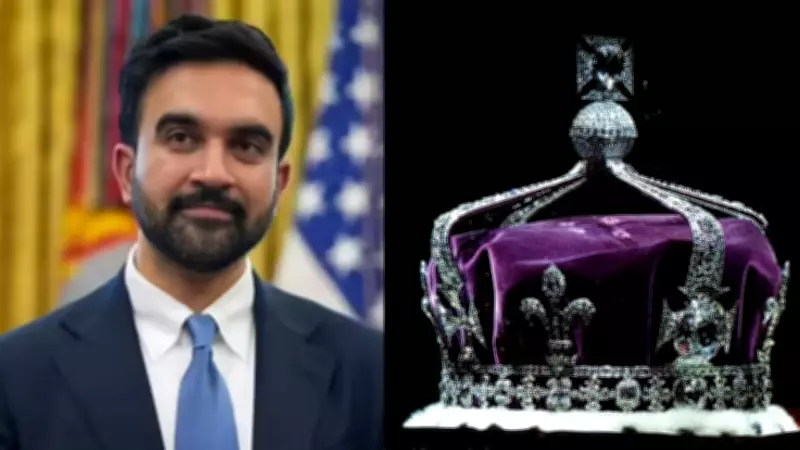
A senior figure in Reform UK has said he would bar New York's mayor Zohran Mamdani from entering Britain after he called for the return of the Kohinoor diamond to India.
Zia Yusuf, who is expected to take on a senior government role if the party comes to power, criticised comments made by Mamdani ahead of his meeting with King Charles III during a US visit this week.
Mamdani had said he would raise the issue of the Kohinoor diamond if given the opportunity, suggesting the gemstone should be returned to India. The diamond, weighing 105 carats, forms part of the Crown Jewels and is displayed at the Tower of London.

India has long argued that the diamond was taken during British colonial rule and should be repatriated, a claim that has remained a point of diplomatic and historical debate.
Responding on social media platform X, Yusuf accused the New York mayor of disrespecting the monarch and said he would take action if in office.
“Mamdani may be looting New Yorkers, but he will have no joy in Britain,” he wrote. “Unless he retracts this insult to our King, as Home Secretary I would ban him from entering Britain.”
He added that the diamond “will stay” in London.
Yusuf’s remarks have drawn scrutiny, with critics questioning how the stance aligns with his party’s stated support for free speech.
The Kohinoor remains one of the most contested artefacts in British possession, with repeated calls from India for its return over several decades.
The controversy has reignited discussions about colonial-era artefacts held by Britain. The Kohinoor, originally from India, has been a symbol of colonial plunder for many. While the British government maintains that the diamond was acquired legally, Indian officials and activists continue to demand its return. The debate touches on broader issues of restitution and historical justice, with similar calls for the return of other artefacts from former colonies.
Yusuf's hardline stance reflects the growing politicisation of cultural heritage issues, particularly among right-leaning parties in the UK. Critics argue that such positions risk damaging diplomatic relations and ignore the legitimate grievances of former colonies. Meanwhile, supporters of repatriation argue that keeping such items is a lingering symbol of imperialism.
The Kohinoor's history is complex, having passed through the hands of various rulers before being seized by the British East India Company. It was presented to Queen Victoria in 1850 and has since been part of the Crown Jewels. India's claim for its return has been consistently rejected by successive British governments, citing legal and treaty obligations.






