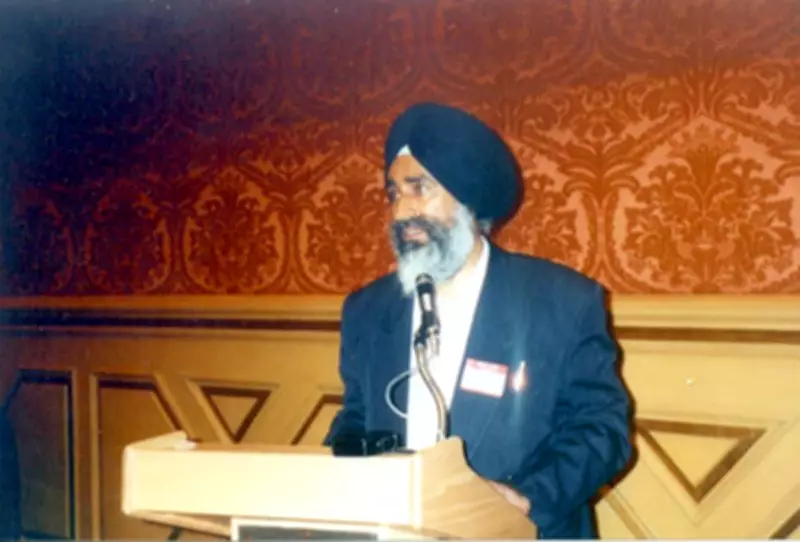
Gurbaxpuri, a veteran journalist with The Tribune in Tarn Taran since 1984, is one of the few reporters who personally interacted with human rights activist Jaswant Singh Khalra before his abduction. In a first-person account, he reveals that he directly warned Khalra about threats to his life during their last meeting in early August 1995.
Final Meeting on Tarn Taran Road
One afternoon in early August 1995, Gurbaxpuri was standing near Maharaja Ranjit Singh Public School on Tarn Taran's main road when Khalra, driving his trademark open jeep, stopped to chat. Gurbaxpuri had been covering Khalra's press conferences and police statements against him. He cautioned Khalra to be careful, referencing a coded warning from a senior police officer.
The officer had used a Gurbani verse in a veiled threat: “Tell him (Jaswant) jo adde so jharre, sharan pare so tarre” – meaning those who resist fall, but those who seek refuge are saved. The officer implied that those opposing the Punjab Police had been eliminated, while those cooperating were spared.

Khalra's Defiant Response
Khalra did not flinch. He smiled and quoted Gurbani in reply: “Jo sharan aaye, tiss kanth laaye” – whoever comes seeking refuge, God embraces them. He said he had already sought refuge in God and was not afraid of death. He added that the police could not easily eliminate him through a fake encounter because his case had gained international attention in England and the USA. He declared he was prepared to sacrifice his life for the truth.
That was the last time Gurbaxpuri saw him.
Kidnapping and Aftermath
On August 31, 1995, then Punjab Chief Minister Beant Singh was assassinated. The Punjab Police launched a massive crackdown, picking up many suspects. On September 6, 1995, Jaswant Singh Khalra was kidnapped from outside his home in Amritsar by men in plain clothes. He was never seen again.
Khalra had been investigating and exposing the cremation of 25,000 unclaimed bodies by the Punjab Police, alleging extrajudicial killings during the counter-insurgency operations. His disappearance sparked national and international outrage. His wife, Parveen Kaur, fought a long legal battle, and in 2006, a Central Bureau of Investigation (CBI) court convicted five Punjab Police officers for his abduction and murder.
Renewed Relevance with Movie Ban
Khalra's story has returned to headlines following a fresh ban on the telecast of the movie “Satluj” (earlier titled “Punjab 95”), which is based on his life. The film, directed by Simranjit Singh Hundal, had faced controversy earlier as well. The ban has reignited debates about freedom of expression and the state's handling of Khalra's legacy.