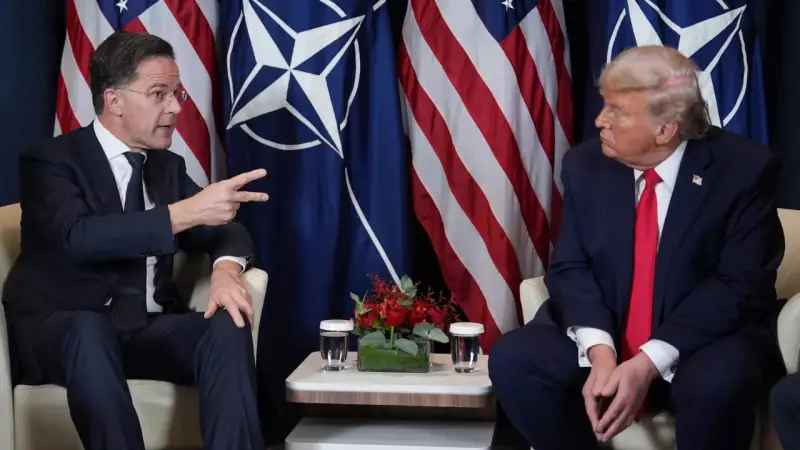
NATO Secretary General Mark Rutte delivered a stark warning to European lawmakers on Monday, asserting that Europe cannot defend itself without the military support of the United States. This statement comes as a direct pushback against growing calls for the continent to reduce its military dependence on Washington, particularly amid rising transatlantic tensions and geopolitical uncertainties.
Europe's Military Dependence on the United States
Addressing members of the European Parliament in Strasbourg, Rutte firmly dismissed the notion of Europe standing alone militarily. "If anyone thinks here again, that the European Union, or Europe as a whole, can defend itself without the US – keep on dreaming. You can’t," he declared emphatically. His remarks highlight the ongoing debate about strategic autonomy versus reliance on American security guarantees that has intensified in recent months.
The Greenland Controversy and Transatlantic Tensions
Rutte's comments arrive at a particularly sensitive moment in transatlantic relations. US President Donald Trump has recently been aggressively asserting interest in acquiring Greenland, an autonomous Danish territory, which has unsettled European allies. Although Trump toned down his rhetoric following discussions with Rutte last week, the episode has reignited serious conversations about Europe's defense capabilities and independence.

The NATO chief warned that without Washington's involvement, Europe would lose what he called "the ultimate guarantor of our freedom, which is the US nuclear umbrella." He emphasized that European Union countries would need to dramatically increase their defense spending to achieve any meaningful autonomy.
Defense Spending Requirements and Nuclear Capabilities
Rutte presented sobering figures about the financial commitments required for European defense independence. He stated that EU nations would need to more than double their defense spending from the current NATO target of five percent agreed upon last year to a staggering ten percent of their budgets. Furthermore, he noted that countries would need to spend "billions and billions" on developing nuclear weapons capabilities.
"So hey, good luck," Rutte added with apparent skepticism about Europe's readiness to make such substantial investments.
European Responses and Counterarguments
France's Foreign Minister Jean-Noel Barrot offered a contrasting perspective in response to Rutte's warnings. Posting on social media platform X, Barrot asserted that "Europeans can and must take responsibility for their own security." This statement reflects the ongoing tension within European leadership about the appropriate balance between transatlantic cooperation and strategic independence.
US Commitment and European Responsibilities
Despite his warnings about European dependence, Rutte insisted that the United States remains fully committed to NATO's Article Five mutual defense clause, which he described as "total." However, he made clear that Washington expects European nations to significantly increase their military spending and contributions to collective security.
"They need a secure Euro-Atlantic, and they also need a secure Europe. So the US has every interest in NATO," Rutte explained, highlighting the mutual benefits of the transatlantic alliance.
Rejection of Standalone European Defense Force
The NATO chief reiterated his praise for President Trump's pressure on European allies to boost their defense budgets. He appeared to reject proposals for creating a standalone European defense force that would replace US troops on the continent, an idea recently floated by EU Defense Commissioner Andrius Kubilius.
"It will make things more complicated. I think Putin will love it. So think again," Rutte cautioned, suggesting that such a move might weaken rather than strengthen European security.
Arctic Defense and Alliance Contributions
Regarding the Greenland controversy, Rutte revealed that he and President Trump agreed NATO should "take more responsibility for the defense of the Arctic." However, he stressed that any negotiations about US presence on the island were strictly matters for Greenlandic and Danish authorities.

"I have no mandate to negotiate on behalf of Denmark, so I didn't, and I will not," he clarified, maintaining appropriate diplomatic boundaries while addressing the sensitive territorial issue.
Recognition of NATO Allies' Sacrifices
Rutte also shared that he reminded President Trump of the significant sacrifices made by NATO allies in Afghanistan, particularly after the US president had previously downplayed their contributions. "For every two American soldiers who paid the ultimate price, one soldier of an ally or a partner, a NATO ally or a partner country, did not return home," he stated solemnly.
The NATO secretary general added, "I know that America greatly appreciates all the efforts," acknowledging the shared sacrifices that have characterized the alliance's military engagements.
This comprehensive address by NATO's leader underscores the complex dynamics shaping transatlantic security relationships at a time of shifting global power structures and renewed debates about defense sovereignty. The tension between European aspirations for strategic autonomy and practical military realities continues to define security discussions across the continent.