

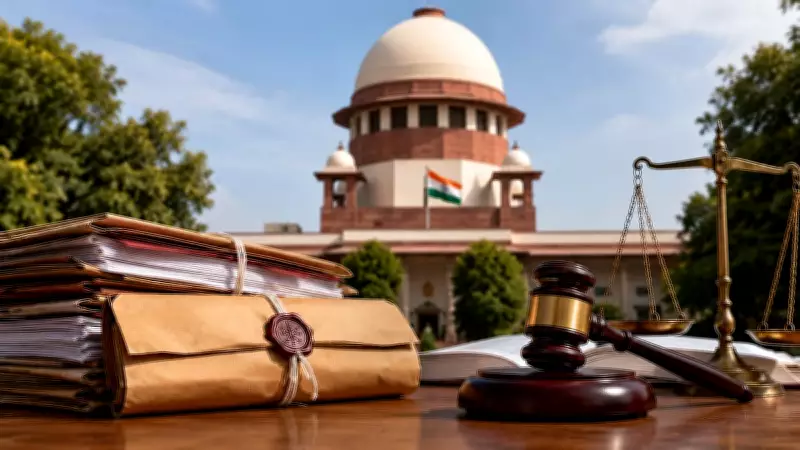
The Supreme Court of India has delivered a landmark judgment, ruling that an accused person cannot be denied access to charge-sheet documents even if the case involves the Official Secrets Act (OSA). The decision reinforces the fundamental right to a fair trial and access to legal documents necessary for defense.
Background of the Case
The ruling came on a petition filed by V K Singh, a retired Major General of the Indian Army who served as Joint Secretary in the Cabinet Secretariat (Research and Analysis Wing) between 2000 and 2004. Singh had challenged the denial of charge-sheet documents in a case involving alleged leaks of sensitive information. The trial court had earlier refused to provide copies of the charge-sheet and accompanying documents, citing the Official Secrets Act.
Supreme Court's Observations
A bench of Justices emphasized that the right to a fair trial under Article 21 of the Constitution cannot be curtailed by invoking the Official Secrets Act. The court stated that withholding charge-sheet documents undermines the accused's ability to prepare a defense and violates principles of natural justice. The bench noted that while national security is paramount, it cannot be used as a blanket excuse to deny legal rights.

The court directed that all documents relied upon by the prosecution must be furnished to the accused, subject to necessary redactions if required for security reasons. However, the court clarified that the prosecution must justify any redactions before a competent court, ensuring transparency and accountability.
Implications of the Judgment
This judgment sets a significant precedent for cases involving national security. Legal experts believe it will curb arbitrary denial of documents and ensure that accused individuals in sensitive cases are not left in the dark. The ruling also aligns with international standards on fair trial rights, which mandate that defendants have access to evidence against them.
The Supreme Court's decision is expected to impact pending cases under the Official Secrets Act and similar legislation. It reinforces the judiciary's role in balancing national security concerns with individual rights. The government may need to review its procedures for handling sensitive documents in criminal trials to comply with this ruling.
In conclusion, the Supreme Court has firmly established that the right to a fair trial prevails over secrecy laws, ensuring justice remains accessible even in cases of national importance.






