

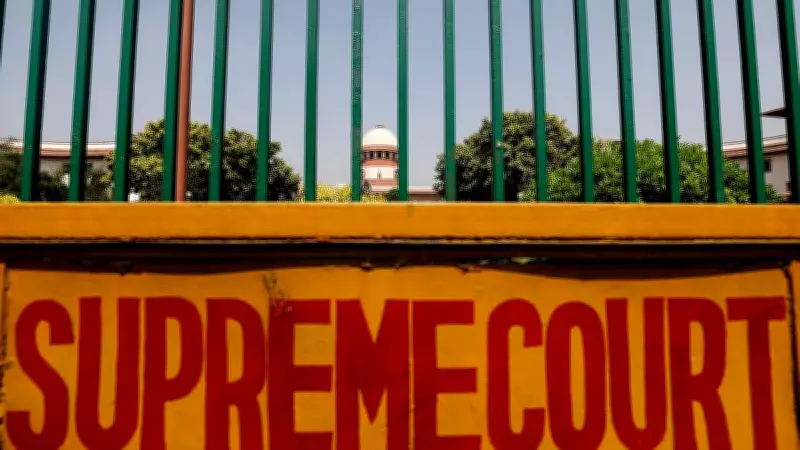
The Supreme Court of India has acquitted a Sri Lankan national who was charged under the Unlawful Activities (Prevention) Act (UAPA), observing that he was falsely implicated in the case. The bench, comprising Justices M.R. Shah and B.V. Nagarathna, set aside the conviction and sentence imposed by the trial court and the high court, citing a complete lack of evidence and serious procedural irregularities.
Case Background
The appellant, a Sri Lankan national, was arrested in 2017 and charged under the UAPA for alleged involvement in terrorist activities. The prosecution claimed that he was a member of a banned organization and had conspired to commit unlawful acts. However, the Supreme Court found that the evidence presented was insufficient to prove his guilt beyond a reasonable doubt.
Supreme Court's Observations
In its judgment, the apex court noted that the prosecution had failed to produce any credible evidence linking the accused to the alleged offenses. The court highlighted that the confessions and statements relied upon by the prosecution were obtained under duress and were not corroborated by independent witnesses. Additionally, the court pointed out that the mandatory procedures under the UAPA were not followed during the investigation and trial.

The bench remarked that the case was a classic example of how the UAPA can be misused to target individuals without proper evidence. It emphasized that the presumption of innocence must prevail unless the prosecution proves guilt beyond a reasonable doubt.
Procedural Lapses
The Supreme Court identified several procedural lapses, including the failure to obtain prior sanction for prosecution as required under Section 45 of the UAPA. The court also noted that the accused was not provided with a fair opportunity to defend himself, as crucial documents were not supplied to him in a language he understood.
Acquittal and Directions
Setting aside the conviction, the court ordered the immediate release of the appellant, unless he was required in any other case. The judgment serves as a reminder that the UAPA, while a stringent law, cannot be used to trample upon the fundamental rights of individuals. The court directed that the appellant be provided with necessary assistance to return to Sri Lanka if he so desires.
The decision has been welcomed by human rights activists, who have long criticized the misuse of the UAPA against minorities and foreigners. The Supreme Court's ruling reinforces the principle that the law must be applied fairly and without bias.






