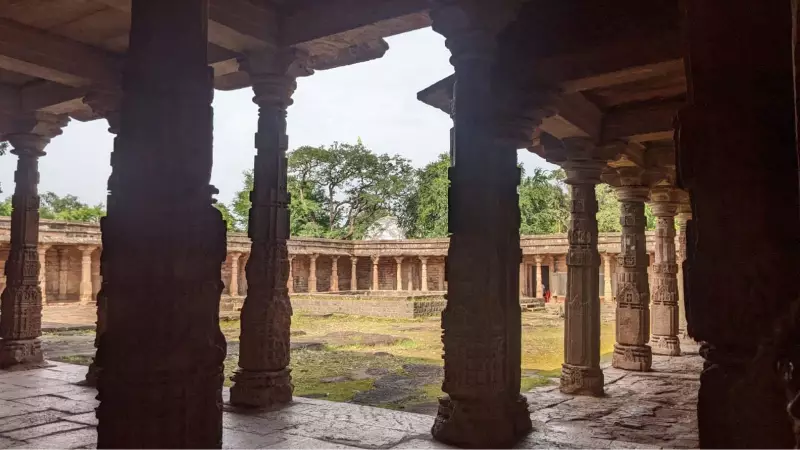
Supreme Court Approves Simultaneous Worship at Bhojshala Site for Basant Panchami
In a significant ruling, the Supreme Court of India has granted permission for simultaneous Hindu puja and Muslim namaz at the disputed Bhojshala Temple/Kamal Maula Mosque complex in Dhar district, Madhya Pradesh, on the occasion of Basant Panchami, which falls on Friday. The decision comes after the Madhya Pradesh Government agreed to implement measures to ensure peaceful coexistence and maintain law and order during the festivities.
Court Directives for Separate Worship Arrangements
A bench comprising Chief Justice of India Surya Kant and Justices Joymalya Bagchi and Vipul M Pancholi issued detailed directions to facilitate the rituals. The court approved a plea by the Hindu Front for Justice, allowing day-long Basant Panchami puja, while also accommodating Muslim Friday prayers. To prevent conflicts, the administration will provide separate entry and exit points for Hindus and Muslims, enabling them to worship simultaneously without disturbance.
Timings and Logistics for the Rituals
During the hearing, the court proposed that Hindus could conduct their rituals until approximately 12 pm and resume after 3 pm, allowing Muslim worshippers to offer namaz between 1 pm and 3 pm. Senior Advocate Salman Khurshid, representing the Muslim side, indicated that only two hours are necessary for namaz, but concerns were raised about the all-day nature of Basant Panchami ceremonies. Additional Solicitor General K M Nataraj assured the court that the state administration is prepared to manage the crowds and maintain order, with passes or other fair means to regulate visitors.

Scientific Survey Report to Be Shared with Parties
In a related development, the Supreme Court directed the Madhya Pradesh High Court to supply copies of a scientific survey of the disputed site conducted by the Archaeological Survey of India (ASI) to the opposing parties. The survey report, currently in a sealed cover before the High Court, will be unsealed in open court, and parties will be given two weeks to file objections. The court emphasized that no physical excavation altering the site's character should occur without its permission, maintaining status quo until the writ petition is resolved.
Appeal for Mutual Respect and Cooperation
The bench appealed to both communities to observe mutual respect and cooperate with the state and district administration in ensuring law and order. The court clarified that it has not expressed any opinion on the merits of the case, leaving all contentions open for consideration by the High Court. This ruling aims to balance religious freedoms while preventing untoward incidents at the historically significant site.