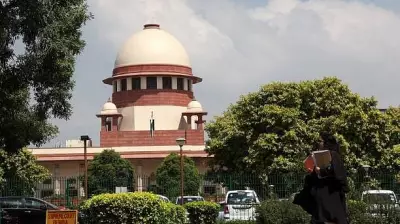
Supreme Court Approves Passive Euthanasia for Harish Rana in Historic Ruling
The Supreme Court of India has delivered a groundbreaking verdict, granting permission for passive euthanasia in the case of Harish Rana, a 32-year-old man from Ghaziabad who has been in a persistent vegetative state for over 13 years. This decision, invoking William Shakespeare's famous soliloquy "To be, or not to be," represents the first-ever application of India's 2018 passive euthanasia framework, allowing the withdrawal of life-sustaining medical treatment to enable a dignified death.
Legal and Medical Framework Behind the Verdict
A bench comprising Justices JB Pardiwala and KV Viswanathan issued this historic ruling after reviewing recommendations from two medical boards and personally interacting with Harish Rana's parents. The judgment emphasizes the "best interest of the patient" principle, concluding that continuing medical treatment no longer serves Harish's welfare. The court directed AIIMS Delhi to admit Harish to its palliative care center and initiate the process of withdrawing or withholding treatment, while ensuring the patient is not abandoned and receives comfort through pain management.
The ruling builds upon the 2018 Constitution Bench decision in Common Cause vs Union of India, which established procedural guidelines for passive euthanasia in India. This case marks the first time these guidelines have been fully implemented, turning a long-debated legal principle into a concrete judicial action. The court affirmed that the right to live with dignity under Article 21 of the Constitution inherently includes the right to die with dignity, particularly for terminally ill patients in irreversible conditions.
Harish Rana's Tragic Journey and Family's Struggle
Harish Rana's life was tragically altered in August 2013 when he fell from the fourth floor of his paying guest accommodation in Kharar, Punjab, during his final semester of a BTech in civil engineering at Panjab University. The accident caused severe brain injuries, including diffuse axonal injury and complete quadriplegia, leaving him in a permanent vegetative state. Despite treatment at premier institutions like PGI Chandigarh and AIIMS Delhi, he never recovered, remaining bedridden and dependent on life support, with no awareness or response to stimuli.
His family, emotionally and financially exhausted, sold their home in Dwarka to cover monthly medical expenses ranging from Rs 24,000 to Rs 30,000. Harish's father, Ashok Rana, expressed the unbearable pain of witnessing his son's suffering, stating, "We cannot see him like this anymore." The family's plea focused on dignity rather than giving up, seeking peace for Harish after years of agony.
Historical Context: From Aruna Shanbaug to Harish Rana
This verdict draws a poignant parallel to the case of Aruna Shanbaug, a nurse who spent over four decades in a vegetative state after a brutal attack in 1973. While the Supreme Court's 2011 ruling in her case laid the legal foundation for passive euthanasia, it was never implemented for her. Harish Rana's case represents the first full expression of that precedent, highlighting the evolving role of India's judiciary in addressing end-of-life issues.
The court noted that prolonged medical treatment for patients in irreversible conditions can become an affront to human dignity, emphasizing the need for compassionate legal responses. As the process at AIIMS Delhi unfolds over the next two to three weeks, Harish Rana's story underscores the complex interplay of law, medicine, and ethics in modern healthcare.