

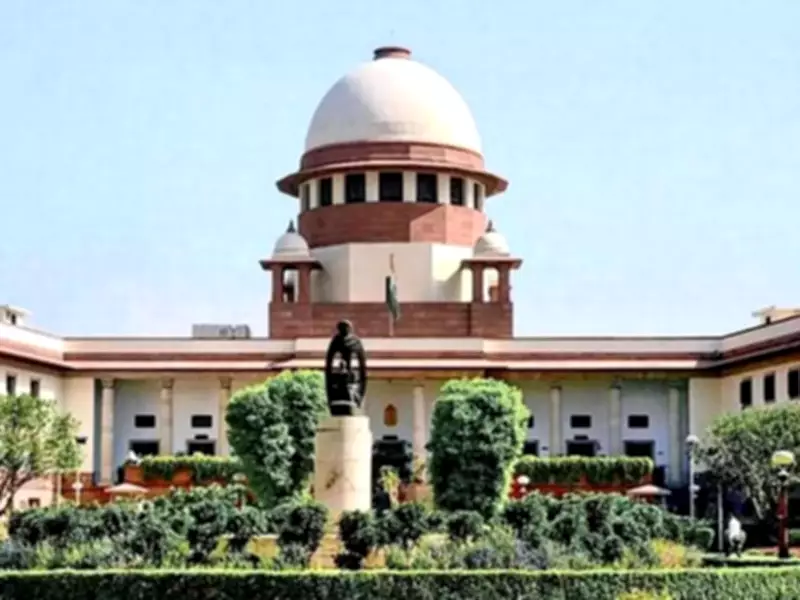
Supreme Court Directs States to Clarify Employment Policies for Acid Attack Survivors
In a significant move aimed at enhancing the rehabilitation of acid attack survivors, the Supreme Court of India has issued a directive to all states and Union Territories. The apex court has asked these governments to provide detailed explanations regarding the feasibility of offering preferential employment opportunities to acid attack survivors within government departments and public sector undertakings (PSUs). This initiative forms part of a broader policy decision to support the physical and economic rehabilitation of individuals who have suffered disfigurement due to such attacks.
Court's Order and Humanitarian Focus
A bench comprising Chief Justice Surya Kant and Justice Joymalya Bagchi delivered this order while addressing a Public Interest Litigation (PIL) filed by acid attack survivor Shaheen Malik. The bench emphasized a humanitarian approach, stating that if logistical challenges prevent the provision of preferential employment, states and UTs should consider paying a honorarium or subsistence allowance to those in need. The court has granted one final opportunity for these governments to submit their comprehensive views on this critical matter.
The Supreme Court has mandated that states and UTs provide specific details for each acid attack victim. This includes academic qualifications, current employment status, marital status, medical treatment received, and the financial expenditures incurred or committed for such treatments. This data collection aims to assess the current situation and tailor rehabilitation efforts effectively.

Legal and Judicial Measures
The bench also highlighted that High Courts have already issued instructions to district courts to prioritize trials related to acid attack cases. To ensure expeditious completion of these trials, the chief justices of the concerned High Courts have been directed to apprise supervising judges to regularly monitor progress. This judicial oversight is intended to accelerate justice for victims and deter future offenses.
In the PIL, the petitioner requested that individuals who have been forcibly ingested acid or other corrosive substances, leading to internal organ damage, be recognized as physically disabled persons, similar to those with external scars from acid attacks. Additional Solicitor General Archana Pathak Dave informed the court that the government is actively deliberating on this issue.
The bench responded by noting that the Bharatiya Nyaya Sanhita (BNS) equates acid attacks and acid ingestion as similar offenses. It suggested that this similarity should be reflected in the Rights of People with Disabilities Act to ensure comprehensive legal protection and support for all victims of such heinous acts.
This Supreme Court directive underscores a proactive stance towards addressing the long-term challenges faced by acid attack survivors, advocating for both employment opportunities and legal reforms to foster their rehabilitation and integration into society.






