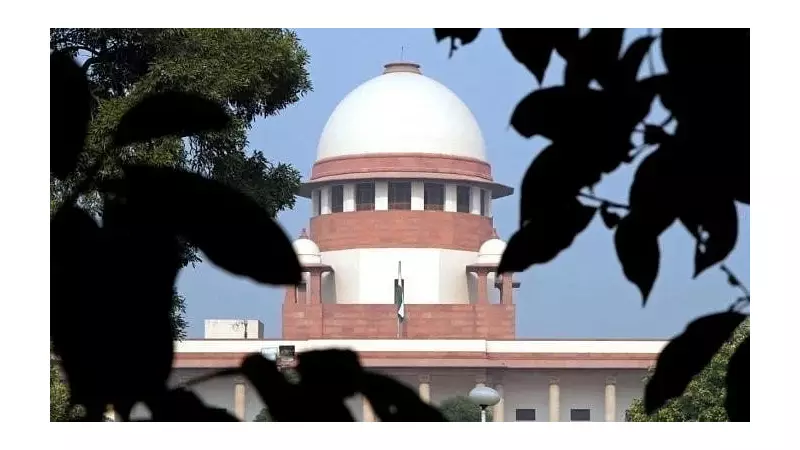
In a significant legal clarification, the Supreme Court of India has ruled that civil courts are not automatically divested of their jurisdiction under the provisions of the Waqf Act. This landmark judgment provides crucial interpretation regarding the interplay between civil courts and specialized waqf tribunals established under the legislation.
Key Ruling on Jurisdictional Authority
The apex court bench explicitly stated that there exists no absolute and all-pervasive ouster of jurisdiction of civil courts even under Section 85 of the Waqf Act of 1995. This clarification comes as a response to ongoing legal debates about whether the Waqf Act completely excludes civil courts from adjudicating matters related to waqf properties and disputes.
Understanding Section 85 Implications
Section 85 of the Waqf Act has been subject to various interpretations in lower courts across India. The Supreme Court's ruling now establishes that while the Act creates specialized mechanisms for waqf dispute resolution, it does not automatically strip civil courts of their inherent jurisdiction. This means civil courts can continue to hear waqf-related cases unless specific conditions outlined in the Act are met.

Legal Context and Background
The Waqf Act was enacted to provide for better administration and governance of waqf properties in India. Waqf refers to permanent dedication of movable or immovable property for religious, pious, or charitable purposes as recognized by Muslim law. The legislation established Waqf Boards and tribunals specifically to handle disputes concerning these properties.
However, questions have persisted about whether these specialized bodies have exclusive jurisdiction over all waqf matters. The Supreme Court's clarification addresses this ambiguity by affirming that civil courts retain concurrent jurisdiction unless explicitly barred by specific provisions of the Act.
Practical Implications for Legal Proceedings
This ruling has several important implications:
- Civil courts can continue to entertain suits related to waqf properties
- Parties have options regarding where to initiate legal proceedings
- The judgment prevents complete exclusion of civil court oversight
- It maintains checks and balances in the legal system
Broader Legal Significance
The Supreme Court's interpretation emphasizes the principle that ouster of civil court jurisdiction cannot be presumed lightly. Courts have consistently held that statutory provisions seeking to exclude civil court jurisdiction must be explicit and unambiguous. The bench's observation that Section 85 does not create "absolute and all-pervasive ouster" reinforces this established legal principle.
This ruling is particularly significant for property disputes involving waqf lands and assets across India. It ensures that civil courts remain available as forums for justice while respecting the specialized mechanisms created by the Waqf Act. The judgment balances the need for specialized waqf dispute resolution with the fundamental right to access civil courts.
The Supreme Court's clarification comes at a crucial time when numerous waqf-related cases are pending in various courts across the country. This authoritative interpretation will guide lower courts in properly applying the Waqf Act's provisions while preserving the constitutional role of civil courts in India's judicial system.