Supreme Court Asserts Judicial Authority to Define Religious Superstition in Landmark Hearing
The Supreme Court of India made a significant declaration on Wednesday, firmly asserting its constitutional authority to determine whether specific religious practices should be classified as superstition. This pronouncement sparked a vigorous exchange with the central government during ongoing hearings related to the Sabarimala temple entry controversy and broader questions of religious freedom in India.
Constitutional Bench Engages in Heated Debate with Centre
A powerful nine-judge Constitution bench, presided over by Chief Justice of India Surya Kant, is currently examining multiple petitions concerning women's access to various religious places across the country. The bench's mandate extends to interpreting the fundamental right to religious freedom under the Indian Constitution.
Representing the Union government, Solicitor General Tushar Mehta presented a contrasting viewpoint, arguing that a secular judiciary lacks the expertise to make determinations about what constitutes superstition within religious contexts. "Judges are experts in law, not religion," Mehta emphasized, according to reports from the Press Trust of India news agency. He further contended that such sensitive determinations should properly fall within the legislative domain under Article 25(2)(b) of the Constitution, which explicitly permits the reform of religious practices through parliamentary action.

Judicial Pushback and Philosophical Questions
The bench offered a robust counter-argument to the government's position. Justice Ahsanuddin Amanullah articulated that the Supreme Court cannot be reduced to merely rubber-stamping legislative perspectives. He asserted that the judiciary possesses inherent jurisdiction to examine whether particular religious customs might qualify as superstitious beliefs. "What follows may be for the legislature, but the court cannot be bound by it," Justice Amanullah observed, highlighting the court's independent constitutional role.
Solicitor General Mehta maintained his cautious stance, warning that in India's remarkably diverse cultural landscape, practices considered superstitious in one region might represent legitimate religious observance in another. He advised against judicial overreach into this complex domain.
Exploring Boundaries of Judicial Intervention
The hearing delved deeper into philosophical questions about the limits of judicial authority. Justice Joymalya Bagchi posed a compelling hypothetical scenario: if a practice like witchcraft were claimed as a religious right and the legislature chose not to act, could courts intervene using constitutional provisions related to public health, morality, and public order?
The Centre acknowledged that judicial review remains permissible on these specific constitutional grounds but reiterated its opposition to courts making determinations based solely on labeling practices as superstitious.
Essential Religious Practices and Constitutional Safeguards
Justice BV Nagarathna contributed a nuanced perspective, emphasizing that courts must evaluate what constitutes "essential religious practices" through the philosophical lens of each faith tradition itself. However, she clarified that this examination must always remain subject to overarching constitutional safeguards and fundamental rights protections.
Historical Context and Broader Implications
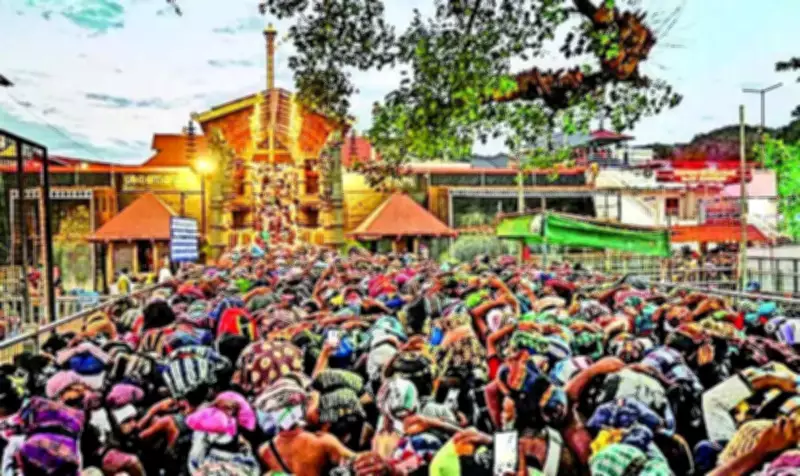
These hearings represent a crucial phase in the Supreme Court's comprehensive reconsideration of issues stemming from its landmark 2018 verdict that permitted women of all ages to enter the Sabarimala temple in Kerala. That controversial decision prompted the referral of broader questions about religious freedom to this expanded nine-judge bench.
The current deliberations carry profound implications for India's constitutional framework, potentially reshaping the relationship between religious autonomy, legislative authority, and judicial review in matters of faith and practice.