

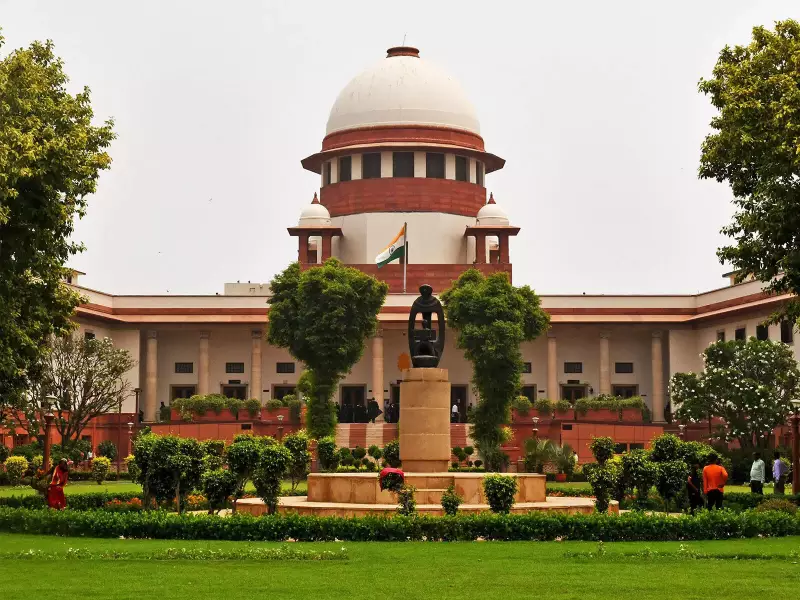
In a significant ruling that clarifies the balance of power between the judiciary and investigative agencies, the Supreme Court of India has stated that courts should not ordinarily impose deadlines for completing probes. The apex court emphasized that doing so would amount to stepping on the "toes" of the investigating bodies.
The Core of the Supreme Court's Ruling
A bench comprising Justices Sanjay Karol and N K Singh delivered this verdict while quashing an order from the Allahabad High Court. The High Court had directed the state police to complete an investigation into a criminal case about procuring arms licenses using forged documents within a strict 90-day timeline. The Supreme Court firmly set aside this order, laying down clear principles for judicial intervention.
The bench underscored that an investigative agency must be given the freedom to conduct its probe without upfront judicial deadlines. The court stated that timelines should be imposed reactively and not prophylactically. This means courts should step in to set deadlines only when there is a clear, unjustified delay on the part of the agency, not as a standard preventive measure.

When Can Courts Intervene with Deadlines?
The Supreme Court specified that judicial directives fixing timelines are justified only in specific scenarios. These include situations where there is evident stagnation, unexplained inaction, or a pattern of delay that cannot be justified by the nature or complexity of the case.
"The necessary conclusion to be drawn from the discussion is that timelines are not drawn by the court to be followed by investigators or the executive right from the beginning, for that would clearly amount to stepping on the toes of the latter," the bench observed. It added that timelines are imposed at a point where not doing so would have adverse consequences, based on material on record demonstrating undue delays.
Balancing Freedom with the Right to Speedy Justice
While affirming the autonomy of investigative agencies, the Supreme Court simultaneously reinforced the constitutional imperative of a speedy trial. It noted that a timely and diligent investigation is an integral part of Article 21 of the Constitution, which guarantees the right to life and personal liberty.
"The challenge, therefore, lies in balancing the practical realities of investigation with the constitutional mandate that criminal proceedings, from investigation through trial, be conducted with reasonable promptitude and care," the bench stated. It highlighted that this balancing act is the precise role of the judiciary.
The court pointed to the wide powers available under Article 226 of the Constitution and Section 482 of the Code of Criminal Procedure to secure the ends of justice when necessary, even as statutory processes are generally followed.
The Complex Realities of Criminal Probes
Explaining why fixed timelines can be impractical, the Supreme Court described the investigative process as often "long and winding." It noted that legal proceedings frequently intersect with and affect the pace and direction of a probe.
The bench listed several factors that can disrupt a straightforward investigation:
- Applications for anticipatory bail or regular bail, which can cause temporary pauses or strategic shifts.
- Court orders calling for further investigation or clarification on specific aspects.
- Judicial directives for a change in the investigating officer.
"Each such intervention requires the investigating agency to revisit its work and sometimes take a fresh path altogether," the court said. It concluded that the process can be straight, full of twists and turns, or frustratingly roundabout before reaching a definitive conclusion for trial.
This ruling provides crucial guidance to courts across India, stressing restraint in micromanaging investigations while retaining the power to act decisively against genuine inaction, thereby upholding both investigative independence and the fundamental right to a speedy trial.






