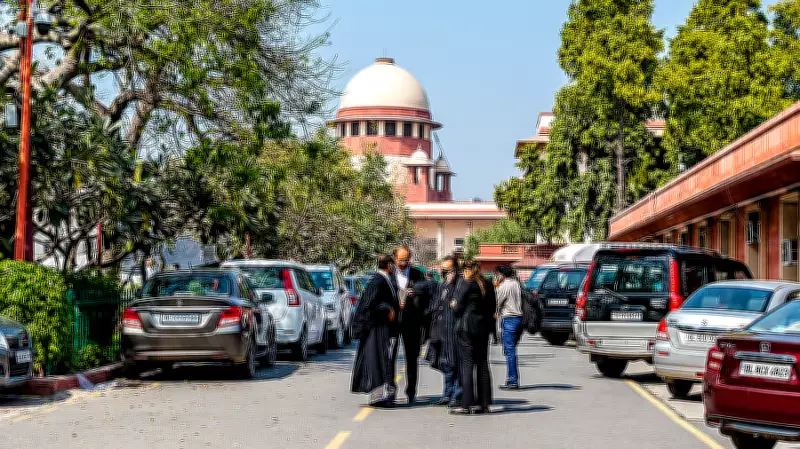
The Supreme Court of India has ruled that any person claiming a customary right must establish its existence through clear, cogent, and satisfactory evidence. A bench comprising Justices Vikram Nath and Prashant Kumar Mishra held that mere assertion or assumption of such a right is not enough; the claimant must prove long usage, prevalence, and reasonableness of the custom.
Case Background and Key Observations
The judgment came in an appeal concerning a property dispute in Jharkhand. The appellant had claimed a customary right over certain land, but the court found that the evidence presented was insufficient to establish the existence of such a custom. The bench emphasized that customs, by their very nature, must be ancient, continuous, and reasonable. They must also be proved through concrete evidence, not just oral assertions or assumptions.
According to the Supreme Court, "A person who asserts a customary right must prove its existence by clear and cogent evidence. The custom must be ancient, certain, and reasonable. It must also be proved to have been enjoyed peaceably and without interruption."

Legal Precedents and Principles
The court referred to earlier judgments that established the principles for proving customary rights. It noted that customs are not to be presumed lightly; they must be strictly proved. The burden of proof lies heavily on the person claiming the custom. The bench added that the custom must also be consistent with statutory laws and public policy.
In this case, the appellant failed to provide documentary evidence or demonstrate that the alleged custom was widely prevalent in the region. The court observed that vague claims without supporting material cannot be accepted as proof of a customary right.
Impact on Property and Customary Law
This ruling reinforces the strict evidentiary standards required for claiming customary rights in India. It serves as a significant reminder for litigants and legal practitioners that customary rights cannot be established on the basis of mere allegations or assumptions. The judgment is expected to impact similar property disputes, particularly in tribal and rural areas where customary land rights are often claimed.
The Supreme Court dismissed the appeal, upholding the lower courts' findings that the appellant had not discharged the burden of proof. The decision underscores the judiciary's commitment to ensuring that property rights are based on clear legal evidence rather than unsubstantiated claims.