
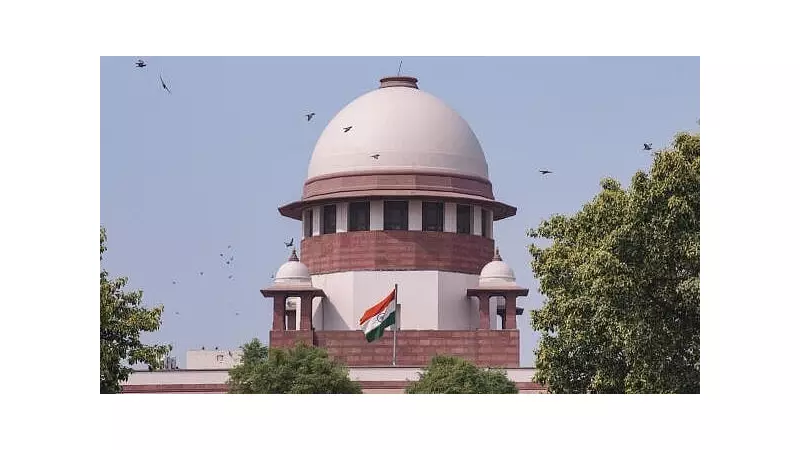
In a landmark ruling with far-reaching consequences, the Supreme Court of India has undertaken the delicate task of balancing national security concerns with the fundamental right to personal liberty. The apex court's decision came while adjudicating a bail application linked to the Delhi riots case, specifically seeking to define the application of the stringent Unlawful Activities (Prevention) Act (UAPA) against the protections guaranteed by Article 21 of the Constitution.
The Core Legal Conundrum: UAPA vs. Article 21
The bench grappled with a central question of law: how do the strict bail provisions under the UAPA, which are designed to combat threats to national security, reconcile with the constitutional guarantee of personal liberty enshrined in Article 21? The UAPA makes the grant of bail exceptionally difficult, often requiring the court to be prima facie satisfied that the accused is not guilty. This creates a high bar for those awaiting trial, sometimes for years.
In this context, the court's observations are pivotal. It emphasized that while the state has a legitimate interest in protecting national security using laws like the UAPA, this power is not absolute. The fundamental rights chapter of the Constitution, particularly Article 21's assurance of life and personal liberty, acts as a crucial check. The judiciary must ensure that the application of harsh laws does not morph into a mechanism for indefinite detention without a speedy trial.
Case Specifics: The Delhi Riots and Accused Umar Khalid
The legal principles were deliberated upon in the bail plea of Umar Khalid, an accused in a larger conspiracy case related to the 2020 Delhi riots. Khalid, along with several others, has been charged under the UAPA. His prolonged incarceration has brought the tension between stringent anti-terror laws and liberty rights into sharp focus. The Supreme Court's ruling, dated 06 January 2026, provides much-needed judicial guidance on navigating this complex terrain.
The court scrutinized the evidence presented by the prosecution to justify the denial of bail under the UAPA's strict standards. It underscored that even under a rigorous law, the allegations must be specific, substantiated, and must genuinely disclose a prima facie case of involvement in unlawful activities as defined by the statute. Vague or generalized claims cannot be the sole basis for denying liberty.
Broader Implications for Justice and Security
This ruling sets a significant precedent for numerous other cases where the UAPA has been invoked. It sends a clear message to lower courts to apply the law's bail provisions with careful judicial scrutiny, ensuring they are not used mechanically to keep accused persons in jail indefinitely. The judgment reaffirms the judiciary's role as the guardian of constitutional rights, even in matters of grave security concern.
The consequences are profound:
- For future bail hearings: Courts must conduct a detailed analysis of evidence, even at the bail stage, to check for prima facie guilt under UAPA.
- For investigative agencies: It raises the bar for the quality of evidence and chargesheets filed in UAPA cases.
- For legal discourse: It reinvigorates the debate on reforming anti-terror laws to prevent potential misuse while safeguarding state security interests.
Ultimately, the Supreme Court has sought to draw a constitutional balance. It acknowledges the necessity of laws like the UAPA in a modern democracy facing security challenges but firmly places them within the overarching framework of fundamental rights. This decision, reported by Sumit Pande, is a crucial step in defining the limits of state power and the enduring promise of liberty in India's legal landscape.