

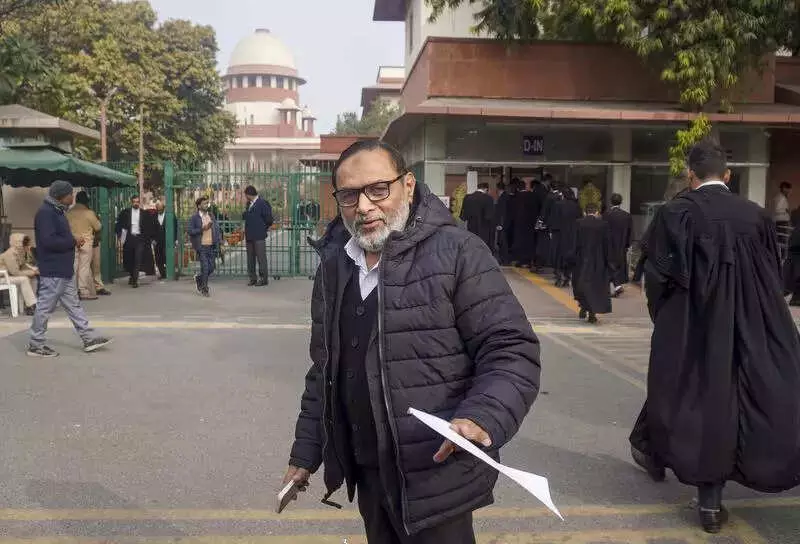
The Supreme Court of India has delivered a significant verdict in the 2020 Delhi riots case, rejecting bail applications from student activists Umar Khalid and Sharjeel Imam. Both individuals have spent over five years in custody without the trial formally beginning.
Court Draws Clear Distinction Between Accused
In a detailed 142-page judgment delivered on January 5, 2026, a bench comprising Justices Aravind Kumar and N V Anjaria declined to grant bail to Khalid and Imam. The court specifically restricted any fresh consideration of bail for one year or until protected witnesses are examined.
However, the same verdict brought relief for five co-accused. Gulfisha Fatima, Meeran Haider, Shifa-ur-Rehman, Mohd Saleem Khan and Shadab Ahmad were granted bail on the very same day. The bench explained this differing outcome through what it described as a hierarchy of culpability emerging from the chargesheets.

Why Some Got Bail While Others Did Not
The Supreme Court placed Khalid and Imam on what it called a qualitatively different footing from their co-accused. According to the prosecution material presented at the bail stage, the two former Jawaharlal Nehru University PhD scholars were allegedly ideological drivers of the conspiracy linked to the Delhi violence.
The court noted that allegations against Khalid and Imam centered on planning and preparatory stages. They were accused of formulating protest strategies, including the transition from sit-in demonstrations to coordinated road blockades or chakka jams. The chargesheets also attribute to them the selection of locations and articulation of broader political objectives.
By contrast, the five co-accused who received bail were characterized as local-level facilitators. Their alleged involvement was limited to logistical arrangements and on-ground coordination. The court described their participation as derivative in nature, flowing from directions allegedly issued by those placed higher in the chain.
Legal Interpretation of UAPA Provisions
A crucial legal question before the Supreme Court was whether acts attributed to Khalid and Imam could fall within the definition of a terrorist act under Section 15 of the Unlawful Activities (Prevention) Act.
The defense argued that allegations disclosed issues of public order at best, not terrorism. They contended that organizing protests and calling for chakka jams amounted to constitutionally protected dissent, especially in the absence of overt violence, weapons, or explosives.
The Supreme Court rejected this narrow construction. Interpreting Section 15, which includes the phrase by any other means, the bench specified that the provision is not limited to conventional forms of violence. The court stressed that the focus of the law is not merely on the weapon used, but on the intent and impact of the act itself.
Planning as Criminal Liability
The bench clarified the relationship between Sections 15 and 18 of UAPA. Read together, sections 15 and 18 disclose a legislative design, the court observed. Section 15 defines the nature of acts characterized as terrorist, while Section 18 ensures criminal liability extends to those who contribute through planning, coordination, or mobilization.
The court explained that acts threatening economic security or disrupting essential supplies also fall within Section 15's sweep. This interpretation becomes particularly relevant given allegations that Khalid called for traffic paralysis in cities and Imam sought to cut off the Northeast through his controversial remarks.
Prolonged Custody Under UAPA
The bench rejected arguments that prolonged pre-trial incarceration should automatically lead to bail. Under Section 43D(5) of UAPA, the court reiterated that bail must be denied if there are reasonable grounds to believe accusations are prima facie true.
The court made it clear that once the prosecution places material meeting this threshold, the statutory bar under Section 43D(5) must ordinarily come into operation. Prolonged incarceration alone cannot override this legislative embargo.

Addressing specific submissions, the bench held that Imam's claim of being in custody during the riots and appealing for non-violence does not neutralize conspiracy allegations at the bail stage. Similarly, Khalid's assertion that his actions amounted to political dissent was rejected, with the court emphasizing that protection of dissent does not cover alleged conduct aimed at systemic disruption.
What the Court Clarified
The Supreme Court emphasized that its assessment rests on three key factors:
- The role attributed to the accused
- The material placed by the prosecution
- The statutory framework governing offences under UAPA
The court does not proceed on identity, ideology, belief or association, the bench stated clearly. It proceeds on role, material and the statutory threshold governing the exercise of jurisdiction.
For Umar Khalid and Sharjeel Imam, this ruling represents not an end but a pause. Their next legal move now rests with the trial court, where the formal proceedings are yet to begin after more than five years of custody.





