Supreme Court Dismisses West Bengal's Challenge to NIA Investigation in Beldanga Violence
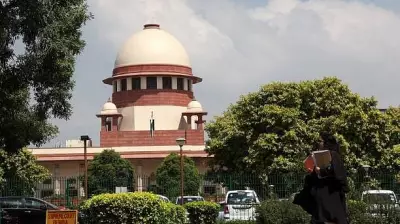
In a significant legal development on the eve of elections, the Supreme Court of India on Monday declined to entertain the West Bengal government's plea challenging the central government's decision to order a National Investigation Agency (NIA) probe into the violent incidents that occurred in Beldanga, Murshidabad district, in January.
Legal Arguments and Judicial Response
Appearing before a bench comprising Chief Justice Surya Kant and Justice Joymalya Bagchi, senior advocate Kalyan Banerjee, representing the state government, argued that the NIA could not have been entrusted with the investigation since the incidents did not warrant the invocation of the Unlawful Activities (Prevention) Act (UAPA). Banerjee contended that the West Bengal Police's initial investigation into the violence revealed no offences that could attract the provisions of the anti-terrorism law.
The bench, however, maintained that whether UAPA provisions could be applied to the accused individuals would be determined by the Calcutta High Court after reviewing the report that the NIA is required to submit. The Supreme Court emphasized that the High Court would decide the correctness of invoking UAPA in connection with the violent protests against the death of migrant worker Alauddin Sheikh in Jharkhand, once it peruses the NIA's findings.
Background of the Case
The controversy stems from the Calcutta High Court's order on January 20, which directed the central government to entrust the investigation into the January 16-17 violence in Beldanga and adjoining areas of Murshidabad district to the NIA. This order came in response to a plea filed by Suvendu Adhikari, the Leader of the Opposition in West Bengal, seeking an NIA probe into the matter.
In its ruling, the Supreme Court bench clarified that the High Court would hear all parties involved during the consideration of the NIA report. The bench subsequently dismissed the state government's appeal, reinforcing the procedural pathway for the investigation.
Previous Petitions and Judicial Observations
This is not the first time the Mamata Banerjee-led government has challenged the NIA's involvement. A similar petition by the state government, contesting the Calcutta High Court's January 20 order that gave discretion to the Centre to assign the probe to the NIA, was disposed of by the same CJI-led bench on February 11.
In that earlier order, the Supreme Court had stated, "We do not deem it appropriate to express any opinion on the merits of this matter at this decidedly premature stage." The court had directed the NIA to submit its report, either post-investigation or during the course of investigation, to the division bench of the High Court in a sealed cover. This report is to determine whether, based on the material gathered, any prima facie case for investigation under the UAPA provisions is made out.
Justices Kant and Bagchi had further noted, "Since there are only passing observations in the impugned order of the High Court, without any definite opinion in relation to attraction of UAPA, we request the High Court to consider the status report or report to be submitted by the NIA independently after hearing the parties."
The Supreme Court's refusal to intervene at this stage underscores the judiciary's preference for allowing the investigative process to unfold under the High Court's supervision, particularly in matters involving potential national security implications under the UAPA framework.