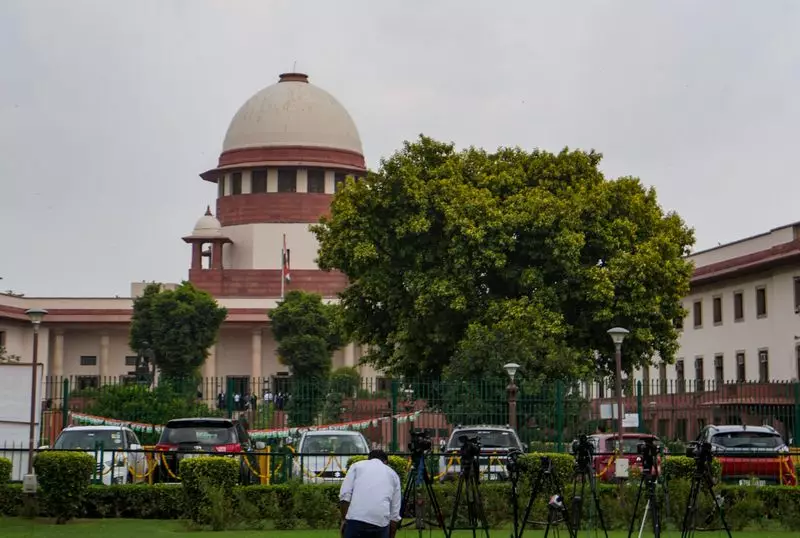
Supreme Court Rejects PIL on Judicial Reforms, Imposes Fine
The Supreme Court of India has firmly dismissed a public interest litigation petition that sought reforms in the judiciary. The court called the petition a 'publicity interest litigation' and imposed a fine on the petitioner for wasting judicial time.
Court's Strong Stance on Frivolous Petitions
A bench of the Supreme Court heard the PIL, which requested various changes to the judicial system. The judges expressed strong disapproval of the petition's nature. They stated it appeared more focused on gaining attention than addressing genuine public concerns.
The bench emphasized that the judiciary already has mechanisms in place for reforms. They noted that such petitions can hinder the court's regular work. The court's decision aims to discourage similar frivolous filings in the future.

Details of the PIL and Petitioner's Arguments
The petitioner filed the PIL seeking reforms like faster case disposal and transparency in judicial appointments. They argued these changes would improve the justice delivery system in India. However, the court found the arguments lacking in substance.
The bench pointed out that the petitioner did not provide sufficient data or evidence to support their claims. They also questioned the timing and motive behind the petition. The court's ruling highlights the importance of well-researched and genuine public interest litigations.
Implications for Future PILs
This dismissal sends a clear message to potential petitioners. The Supreme Court will not entertain petitions that seem driven by publicity rather than public interest. The imposed fine serves as a deterrent against wasting the court's valuable resources.
Legal experts believe this decision could lead to more scrutiny of PILs. It may encourage petitioners to ensure their cases have merit before approaching the court. The ruling reinforces the judiciary's role in filtering out non-serious matters.
Background on Judicial Reforms in India
India's judiciary has seen ongoing discussions about reforms for years. Issues like case backlog and appointment processes are often debated. The Supreme Court itself has initiated several reforms through its own judgments and committees.
However, the court maintains that reforms should come through proper channels. This includes parliamentary legislation or internal judicial mechanisms. The dismissal of this PIL underscores the court's preference for structured approaches over ad hoc petitions.
The Supreme Court's action today reaffirms its commitment to efficient justice delivery. It also protects the sanctity of public interest litigation as a tool for genuine social change.