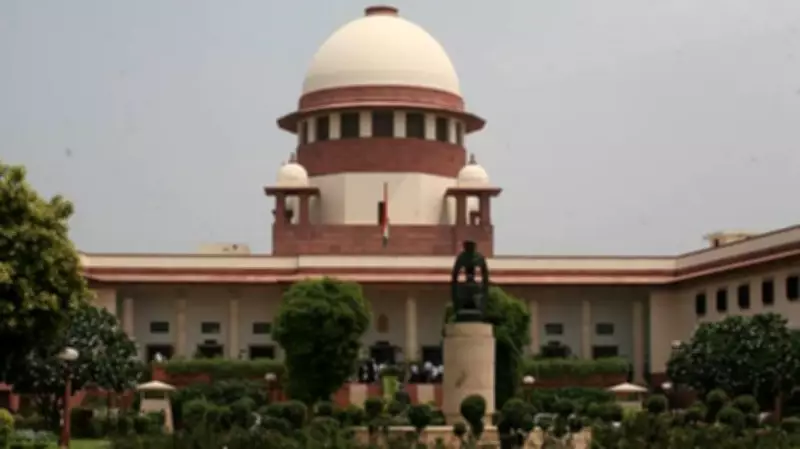
The Supreme Court of India has dismissed a public interest litigation (PIL) that sought the formulation of guidelines for the time-bound disposal of cases across the country. The plea also demanded the creation and implementation of a uniform national case flow management policy applicable to all courts within the Indian judicial system.
Background of the Plea
The petition, filed by a group of legal activists, argued that the absence of a structured timeline for case resolution leads to inordinate delays, causing hardship to litigants. It highlighted the backlog of millions of cases in various courts, emphasizing the need for a standardized approach to manage case flow efficiently. The petitioners contended that such a policy would ensure timely justice, reduce pendency, and enhance public confidence in the judiciary.
Court's Observations
A bench comprising Justices D.Y. Chandrachud and J.B. Pardiwala heard the matter. The court observed that while the issue of case backlog is significant, the judiciary has its own mechanisms and constitutional autonomy to manage its affairs. The bench noted that the Supreme Court has previously issued guidelines and directions on case management, including the adoption of alternative dispute resolution mechanisms and the use of technology to expedite proceedings. The court expressed reluctance to interfere with the day-to-day functioning of lower courts, stating that such matters fall within the domain of judicial administration.

Reasons for Dismissal
The Supreme Court dismissed the plea on several grounds:
- Lack of Maintainability: The court held that the PIL did not raise any legal or constitutional issue that warranted judicial intervention. The petitioners failed to demonstrate a violation of fundamental rights or statutory provisions.
- Separation of Powers: The court emphasized the principle of separation of powers, noting that the executive and legislature are better suited to formulate policies on case management, while the judiciary focuses on adjudication.
- Existing Measures: The bench pointed out that the judiciary has already implemented various reforms, such as the National Judicial Data Grid (NJDG) and the e-Courts project, which aim to monitor and reduce pendency.
Implications
The dismissal of the plea means that there will be no court-mandated timeline for case disposal or a uniform national policy at this stage. However, the court did not bar the government or the judiciary from voluntarily adopting such measures. Legal experts suggest that the onus now lies on the Law Commission and the Ministry of Law and Justice to propose legislative or administrative reforms to address the issue of case backlog.
The Supreme Court's decision reinforces the autonomy of the judiciary in managing its internal processes while acknowledging the need for systemic improvements. The court also encouraged litigants to utilize alternative dispute resolution mechanisms like mediation and arbitration to reduce the burden on courts.