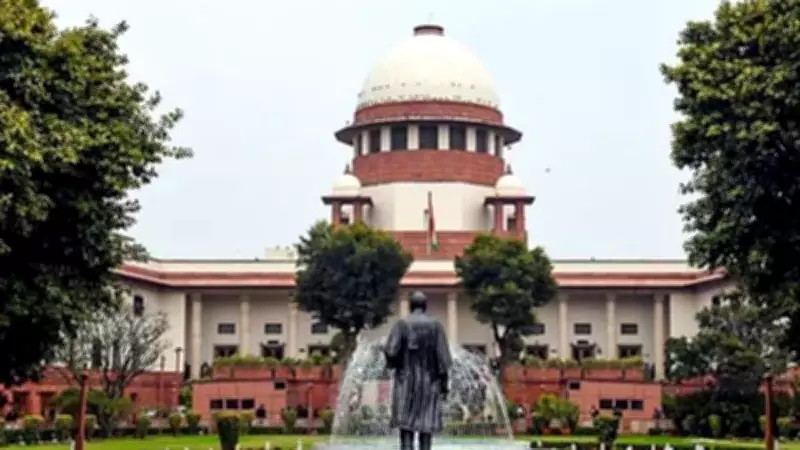
Supreme Court Dissolves Marriage, Quashes Domestic Violence Case in Landmark Ruling
In a significant judgment that underscores the sanctity of mediation agreements in matrimonial disputes, the Supreme Court of India has invoked its extraordinary powers under Article 142 of the Constitution to dissolve a marriage and quash a domestic violence case. The ruling came after a woman, who had initially agreed to a divorce and signed a financial settlement, reneged on her promise after receiving a substantial portion of the money from her husband.
Background of the Case
The case involved a matrimonial dispute where the wife consented to a divorce and entered into a financial settlement agreement for separation. However, after obtaining a significant sum from her husband, she not only withdrew her consent but also filed a criminal case against him and his family members. This action prompted the husband to approach the Supreme Court, seeking relief from what he argued was a misuse of legal proceedings.
Court's Invocation of Article 142
On Monday, a bench comprising Justices Rajesh Bindal and Vijay Bishnoi exercised its jurisdiction under Article 142, which allows the Supreme Court to pass any decree or order necessary for doing complete justice in any cause or matter. The court dissolved the marriage and quashed the domestic violence case, emphasizing the importance of upholding mediation agreements.

The wife attempted to justify her actions by claiming that the husband had not returned her jewellery valued at Rs 120 crore and gold biscuits worth Rs 50 crore, which she alleged were excluded from the settlement agreement to avoid alerting the income tax department. However, the bench dismissed these allegations, noting that such claims were never mentioned in any prior documents or proceedings.
Court's Strong Rebuke
The Supreme Court delivered a stern rebuke to the wife, terming her arguments as "highly egregious" and expressing dismay at the audacity of such submissions. In its judgment, the bench stated, "We are appalled at the sheer audacity of such a submission being advanced before a court of law and deplore the evident disregard exhibited towards the legal system."
The court further elaborated on the legal principles governing mediation settlements. It emphasized that once parties enter into a settlement agreement, duly authenticated by a mediator, any resilement from the agreed terms must be met with heavy costs. The bench asserted, "It is trite law that once the parties have entered into a settlement agreement which was duly authenticated by the mediator, in case of any resilement from such terms as agreed upon in the settlement, the resiling party must be encumbered with heavy costs."
Importance of Mediation in Matrimonial Disputes
The ruling highlights the critical role of mediation in resolving matrimonial disputes and the need for strict adherence to settlement terms. The court warned that deviations from mediated agreements undermine the foundational basis of the mediation process and should be dealt with strictly. This decision serves as a precedent to deter parties from misusing court proceedings after entering into binding settlements.
By invoking Article 142, the Supreme Court has reinforced the principle that justice must prevail over procedural technicalities, especially in cases where one party attempts to exploit legal mechanisms for personal gain. The judgment is expected to have far-reaching implications for future matrimonial disputes, encouraging parties to honor their commitments in mediation agreements.