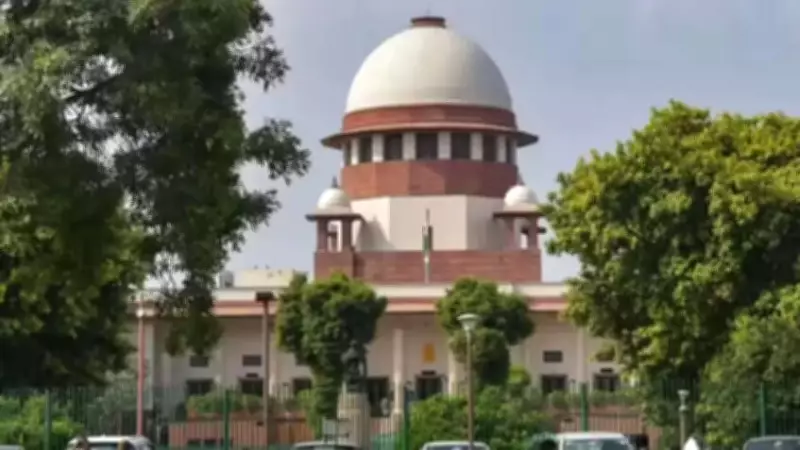
Supreme Court Dissolves Marriage, Quashes Domestic Violence Case Over Breach of Settlement
In a landmark ruling, the Supreme Court of India has invoked its extraordinary jurisdiction under Article 142 to dissolve a marriage and quash a domestic violence case, highlighting the misuse of legal proceedings in matrimonial disputes. The court took this decisive action after a woman reneged on a financial settlement agreement and filed a criminal case against her husband and his family members.
Background of the Case
The case involved a couple where the wife had initially agreed to a divorce and signed a financial settlement for separation. As per the agreement, the husband paid her Rs 75 lakh as the first installment, Rs 14 lakh for a car purchase, and returned specified jewellery items. However, after receiving a substantial part of the money, the wife withdrew her consent for the divorce and filed a domestic violence case against her husband and his mother.
Court's Rejection of Wife's Claims
The wife argued that she withdrew her consent because the husband failed to return additional jewellery worth Rs 120 crore and gold biscuits worth Rs 50 crore, which were allegedly excluded from the agreement to avoid alerting the income tax department. A bench of Justices Rajesh Bindal and Vijay Bishnoi dismissed these claims, noting that such issues were never mentioned in any documentation, including WhatsApp chats between the estranged couple.

The court termed her arguments as "highly egregious" and expressed dismay at the audacity of such submissions, stating, "We are appalled at the sheer audacity of such a submission being advanced before a court of law and deplore the evident disregard exhibited towards the legal system."
Legal Principles Upheld
The bench emphasized that once parties enter into a settlement agreement, duly authenticated by a mediator, they cannot resile from its terms. The court stated, "It is trite law that once the parties have entered into a settlement agreement which was duly authenticated by the mediator, in case of any resilement from such terms as agreed upon in the settlement, the resiling party must be encumbered with heavy costs." It added that any deviation from mediated settlements should be dealt with strictly to protect the integrity of the mediation process.
Quashing of Criminal Case
The court found that the domestic violence case was filed only after the wife withdrew her consent for mutual divorce, with no specific allegations of violence by the husband or his mother. The bench ruled, "A criminal complaint regarding domestic violence, with mere reference to the names of the family members or the husband without any specific allegation that points towards their active involvement in commission of such an act of violence, shall be nipped in the bud." It warned against allowing emotions to fuel criminal prosecutions, which could lead to abuse of law and harassment.
Final Orders and Implications
In its final order, the Supreme Court dissolved the marriage and directed the husband to pay the remaining installment of Rs 70 lakh to the wife. It also quashed all civil and criminal cases lodged by the couple against each other. The court allowed the husband's plea for divorce, which was filed through his advocate Prabhjit Jauhar, reinforcing the importance of upholding settlement agreements in legal disputes.
This ruling serves as a stern reminder that courts will not tolerate misuse of legal processes in matrimonial matters and will take strong measures to ensure justice and adherence to agreed terms.