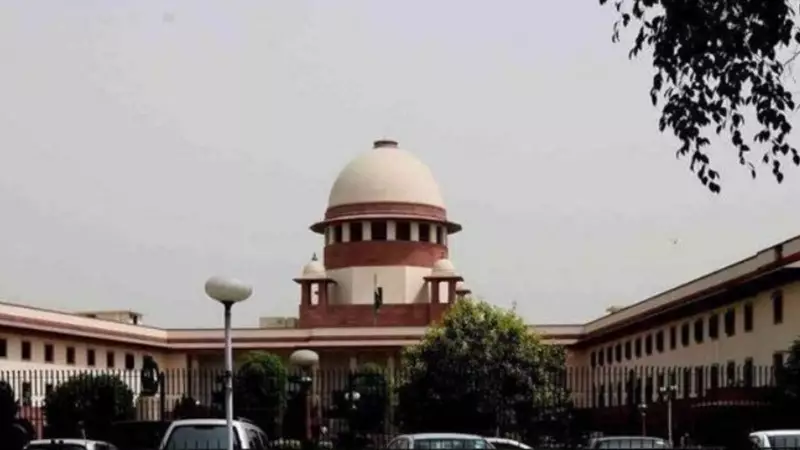
In a significant ruling that reinforces constitutional safeguards against arbitrary state action, the Supreme Court of India has set aside the preventive detention of a Hyderabad woman accused in drug-related cases. The apex court underscored the critical distinction between threats to "law and order" and "public order," holding that the former alone cannot justify the extreme measure of preventive detention.
The Case: Detention Over Ganja Seizures
The case centered on Aruna Bai alias Anguri Bai, against whom the Collector and District Magistrate of Hyderabad passed a detention order on March 10, 2025. The order was issued under the stringent Telangana Prevention of Dangerous Activities Act following the registration of three criminal cases involving the seizure of "ganja." The detaining authority argued that ordinary law had no "deterrent effect" on Bai and expressed apprehension that she would continue illegal activities if granted bail, necessitating detention as a "last resort" for public interest.
This detention was challenged by her daughter, Roshini Bai, but the Telangana High Court upheld it in October 2025, concluding her actions raised a public threat. The matter then reached the Supreme Court, where a division bench comprising Justices J K Maheshwari and Atul S Chandurkar heard the appeal.

SC's Landmark Distinction: Law & Order vs Public Order
In its judgment dated January 8, the Supreme Court bench delivered a pointed critique of the detention order. The court emphasized that preventive detention is a drastic measure to be used sparingly and only when an individual's activities pose a grave and specific threat to "public order"—a concept distinct from general "law and order" issues.
The bench found the detention order fundamentally flawed. "The order of detention does not indicate in what manner the maintenance of public order was either adversely affected or was likely to be adversely affected so as to detain the detenu," the court observed. It noted that the authority had merely reproduced statutory language without providing concrete evidence that Bai's activities posed a grave threat to public health or social peace.
"Mere Apprehensions Are Not Sufficient"
The court rejected the state's argument that Bai's continued illegal acts showed ordinary law was insufficient. It clarified that if the authority believed she had violated bail conditions, steps for cancellation of bail should have been pursued instead of resorting to preventive detention. The bench referred to precedents, stating "the law of preventive detention should not be used merely to clip the wings of an accused" in an ongoing prosecution.
In a crucial finding, the court held that "mere apprehensions" of future crimes are not a sufficient ground for preventive detention. It stated, "mere registration of three offences by itself would not have any bearing on the maintenance of public order unless there is material to show that the narcotic drug dealt with by the detenu was in fact dangerous to public health."
Consequently, the Supreme Court quashed both the detention order and the High Court's judgment affirming it. The court directed the immediate release of Aruna Bai, provided she is not required in any other legal proceedings. This ruling serves as a potent reminder to authorities to exercise their extraordinary powers of preventive detention with utmost caution and within the narrow confines defined by the Constitution.