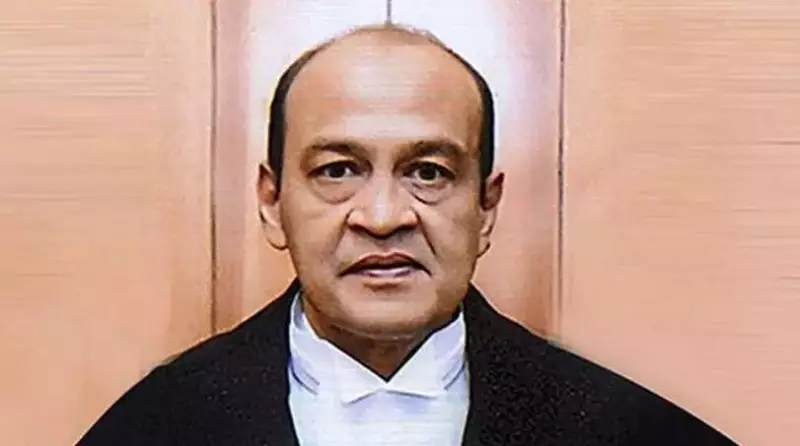
The Supreme Court of India has stepped in to examine a significant legal challenge concerning the impeachment process of a High Court judge. On Wednesday, the apex court agreed to hear a plea filed by Allahabad High Court judge, Justice Yashwant Varma, which contests the validity of Lok Sabha Speaker Om Birla's decision to constitute a three-member committee for his impeachment.
The Core of the Legal Challenge
The impeachment proceedings were initiated following the discovery of unaccounted cash at Justice Varma's official residence. Represented by former Attorney General Mukul Rohatgi, the judge's petition highlights a critical procedural lapse in the Speaker's actions. The bench, comprising Justices Dipankar Datta and A G Masih, issued formal notices to the Lok Sabha and Rajya Sabha secretariats, seeking their responses.
Rohatgi argued before the court that despite impeachment notices being submitted in both Houses of Parliament, the Speaker proceeded unilaterally to form the committee on August 12. He did so without waiting for the Rajya Sabha Chairman's decision on admitting the motion or engaging in the mandatory joint consultation as prescribed by law.

Violation of The Judges (Inquiry) Act, 1968
The petition, filed through advocate Vaibhav Niti, centers on an alleged violation of the Judges (Inquiry) Act, 1968. The Act clearly states that when notices for a judge's removal are given on the same day in both Houses, a committee can only be constituted jointly by the Speaker and the Chairman, and only after the motion has been admitted in both Houses.
The sequence of events is crucial. Separate motions seeking Justice Varma's removal were presented before the Lok Sabha and the Rajya Sabha on July 27, both meeting the required numerical support. The Speaker admitted the Lok Sabha motion on August 12 and formed the committee. However, the petition contends that since a motion was also given in the Rajya Sabha on the same day (July 27), the Speaker's unilateral action was in clear derogation of the law.
The Act further stipulates that if notices are given on different dates, the later notice shall be rejected. This legal nuance forms the bedrock of the judge's challenge.
Supreme Court's Pivotal Question
After reviewing the provisions, the Supreme Court bench posed a pointed question, wondering why this procedural issue was not raised by the many legal experts who are members of Parliament. "So many MPs and legal experts but no one pointed this out?" the court observed, underscoring the significance of the legal argument presented.
The court's scrutiny now brings the entire impeachment process under a microscope, focusing on the precise statutory procedure that must be followed in such grave matters. The outcome of this case could set a vital precedent for how impeachment motions against judges are handled in the future, ensuring strict adherence to parliamentary law and procedure.