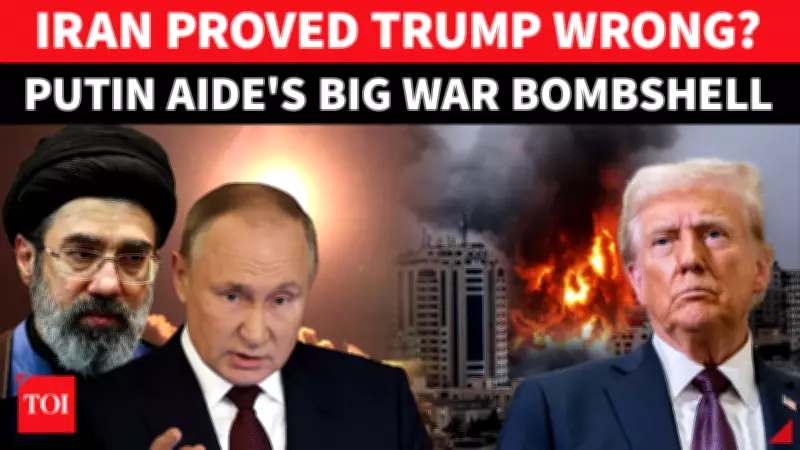
Russian Diplomat Delivers Stinging Critique of US-Israel Military Campaign Against Iran
In a significant diplomatic development, Russian Foreign Minister Sergey Lavrov has issued a forceful condemnation of the United States and Israel regarding their ongoing military strikes against Iran. Speaking during high-level talks held in Moscow, Lavrov asserted that both nations likely now recognize "how profoundly mistaken they were" if they believed Iran could be swiftly defeated through military means.
Accusations of Strategic Resource Pursuit Override Nuclear Negotiations
Lavrov leveled serious allegations against the United States, claiming that Washington's primary objective in the conflict is not genuine diplomatic engagement concerning Iran's nuclear program. Instead, he accused American leadership of pursuing strategic access to Iran's substantial uranium resources and other critical materials, framing the military campaign as a resource acquisition strategy disguised as security policy.
The Russian foreign minister reiterated Moscow's consistent position calling for an immediate ceasefire in the escalating conflict. He emphasized Russia's readiness to serve as a mediator between the involved parties should such diplomatic intervention be formally requested, positioning Russia as a potential stabilizing force in the volatile region.

Regional Escalation and International Concerns
Lavrov's remarks arrive at a particularly tense moment as hostilities involving Iran, Israel, and various regional armed groups continue to intensify. The expanding conflict has generated mounting international apprehension about the potential for a broader regional war that could destabilize the entire Middle East and impact global security architecture.
The diplomatic statement from Moscow represents one of the most direct criticisms from a major global power regarding the current military actions against Iran. It highlights the deepening geopolitical divisions surrounding the conflict and underscores the complex international dimensions of what initially appeared as a regional confrontation.
Observers note that Lavrov's comments reflect Russia's strategic interests in maintaining influence in Middle Eastern affairs and protecting its diplomatic and economic partnerships with Iran. The explicit mention of uranium resources adds a new dimension to the public discourse surrounding the conflict's underlying motivations.
As military engagements persist, the international community watches closely to see whether Lavrov's offer of mediation might gain traction among the conflicting parties or whether the violence will continue to escalate despite diplomatic interventions from global powers.