

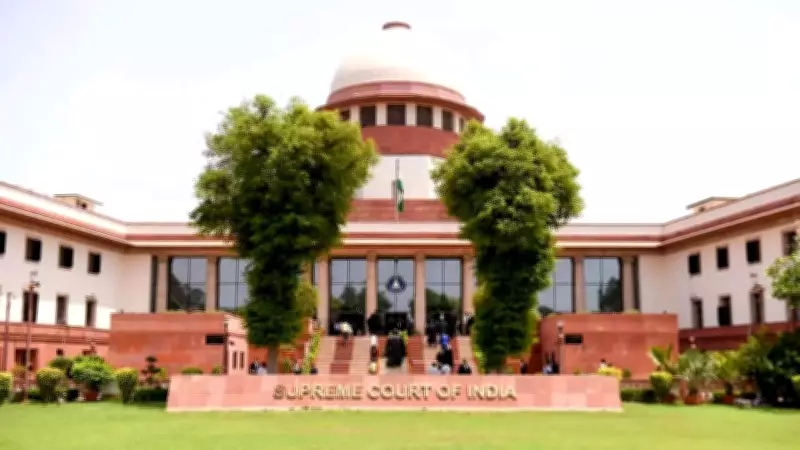
The Supreme Court has come to the rescue of a poor murder convict who was left abandoned by his family and denied proper legal advice, after the Orissa High Court dismissed his appeal solely on the ground of delay. The convict had spent an additional 10 years in prison following the High Court's 2016 order, before the apex court intervened.
High Court's approach termed 'very disturbing'
A bench of Justices J B Pardiwala and Ujjal Bhuyan described the High Court's decision as 'very disturbing' and invoked the extraordinary power under Article 142 of the Constitution to ensure complete justice. The court directed the release of the convict, noting that his conduct in jail had been satisfactory and he had already served 22 years of his sentence without a single release on parole or furlough.
Failure to consider practical realities
The Supreme Court observed that the High Court, while declining to condone the delay, failed to consider that the petitioner was already undergoing a sentence of over 12 years at the time of the appeal. The bench stated, 'The HC ought to have considered that it was an appeal through jail. This itself was sufficient for the HC to take a practical view or rather a sympathetic view of the matter and at least ought to have condoned the delay so as to give one opportunity to the petitioner to argue his criminal appeal on merits.'

Futile to hear appeal on merits now
The court further noted that since the petitioner has now served nearly 22 years, ordering the High Court to hear the criminal appeal on merits would be a futile exercise. Instead, the bench exercised its jurisdiction under Article 142 as an exceptional case and ordered the release of the petitioner on bail upon executing a personal bond of Rs. 10,000 to the satisfaction of the Jail Superintendent.
Legal aid for remission
The bench also directed the District Legal Services Authority, Koraput, to assist the convict in preparing an appropriate representation seeking remission of his sentence.
Case background
The convict had challenged his conviction and life imprisonment in the Orissa High Court after a nine-year delay. The High Court refused to decide the plea on its merits and dismissed it solely on the ground of delay. The Supreme Court's intervention highlights the need for courts to consider the spirit of the law, especially when dealing with marginalized individuals who lack proper legal representation.






