Supreme Court Grants Bail to Three Accused in Pune Porsche Crash Blood Sample Tampering Case
The Supreme Court of India on Monday granted bail to three individuals accused of tampering with blood samples in the high-profile 2024 Pune Porsche hit-and-run case that resulted in the tragic deaths of two young software engineers. The bench, comprising Justices B V Nagarathna and Ujjal Bhuyan, directed the release of Ashish Satish Mittal, Aditya Avinash Sood, and Amar Santhosh Gaikwad on bail, subject to conditions imposed by the trial court, noting they had been incarcerated for approximately 18 months.
Background of the Fatal Accident and Investigation
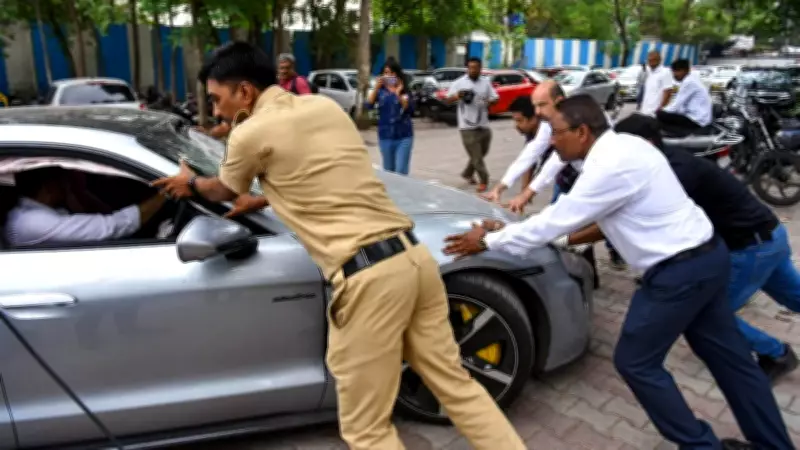
On May 19, 2024, engineers Aneesh Awadhiya and Ashwini Koshta lost their lives when a speeding Porsche car, allegedly driven by an intoxicated 17-year-old from a prominent Pune realtor family, collided with their motorcycle at the Kalyani Nagar Junction in Pune. The incident reportedly occurred after the minor and his friends celebrated their Class 12 examination results at a local pub. The vehicle, a Porsche Taycan luxury car, was being operated without number plates at the time of the accident.
The subsequent police investigation uncovered a web of alleged misconduct, including cover-ups, bribery, abuse of power, and tampering with blood samples at the government-run Sassoon General Hospital in Pune. In total, apart from the minor driver, the police charged and filed chargesheets against 10 other individuals. The parents of the minor were also implicated in criminal conspiracy charges for allegedly orchestrating a swap of his blood sample with that of his mother to conceal evidence of intoxication.

Legal Proceedings and Bail Appeals
The bail appeals by Mittal, Sood, and Gaikwad challenged the December 16, 2025, order of the Bombay High Court, which had denied bail to them and five other accused. The high court had dismissed bail pleas for eight individuals, including Vishal Agarwal (the father of the minor driver), Arunkumar Singh, Ashpak Makandar, and doctors Ajay Taware and Shrihari Halnor. In its ruling, the high court emphasized that the collective objective of the applicants was to tamper with evidence through falsification of medical records, supported by a premeditated conspiracy.
The high court cited investigation materials, such as chemical analysis and DNA reports, which indicated that a different method of blood sample collection was adopted solely for bribery purposes. It expressed concerns that granting bail, even under stringent conditions, could lead to further tampering with prosecution evidence using financial influence and dominance, thereby jeopardizing the course of justice. The court highlighted unusual delays in medical examinations and belated statements as factors contributing to this apprehension.
Supreme Court's Remarks on Parental Responsibility
While granting bail, Justice Nagarathna made poignant observations regarding the role of parents in such incidents. She remarked, "Father and mother are to be blamed for not having control over their children. Celebration on the basis of substance and then going at top speed, resulting in the killing of innocent people... The law has to catch up on these people."
Justice Nagarathna further emphasized, "Most importantly, the parents are responsible for handing over the vehicle to the children and giving them sufficient money to have a gala time... This is the problem. Because parents have no time to talk to the children, have a dialogue with them, and spend time with them. So what is the substitute? Money, ATM card." These comments underscore broader societal issues related to parental accountability and the consequences of neglecting child supervision.
Implications and Future Proceedings
The Supreme Court's decision to grant bail marks a significant development in this case, which has drawn national attention due to its implications for juvenile law, road safety, and ethical conduct in medical and legal systems. The trial court will now determine the specific conditions for bail, while the broader legal proceedings against all accused continue. The case serves as a stark reminder of the need for stringent enforcement of laws and parental vigilance to prevent such tragedies in the future.