Supreme Court Weighs Harish Rana's Passive Euthanasia Plea, Draws Aruna Shanbaug Comparison
Additional Solicitor General Aishwarya Bhati presented a stark comparison before the Supreme Court on Thursday. She contrasted the case of Harish Rana, who has remained in a vegetative state for thirteen years, with that of Aruna Shanbaug. Shanbaug spent forty-two years in a similar condition until her death in 2015.
Bhati argued that Rana's medical situation is more severe. She appeared before a bench comprising Justices J B Pardiwala and K V Viswanathan. Representing the Central Government, Bhati noted that Shanbaug exhibited some minimal responses. Her eyes would react, and she could move her lips to lick sugar.
A State of Complete Inertness
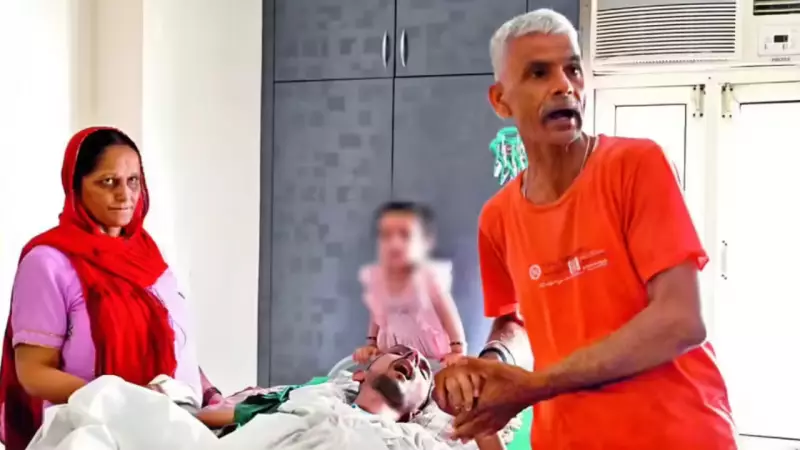
Harish Rana shows no such signs. Bhati told the court he exists in a state of total inertness. His eyes do not move. They do not respond to any perceived danger. This complete lack of responsiveness forms a key part of the government's argument.

Advocate Rashmi Nandakumar represented Harish Rana before the bench. She submitted that his condition is both irreversible and incurable. He has one hundred percent disability with no hope of recovery since his accident. Nandakumar urged the court to make a final decision on withdrawing his artificial life support system.
Doctors Concur on Withdrawal
Bhati informed the court she consulted the medical teams. This included members of both the Primary and Secondary Boards who examined Harish Rana. The doctors unanimously agreed that continuing medical treatment was not in his best interest.
"The doctors are also of the opinion that Harish would remain in this permanent vegetative state for years to come," Bhati stated. She described him with tubes inserted all over his body, never able to recover or live a normal life. The medical opinion suggested allowing nature to take its course.
Legal Procedure and the Court's Role
The Supreme Court had legalized passive euthanasia in a landmark 2018 verdict. It established a strict procedure for such cases. The decision to withdraw life support requires concurrence from both a primary and a secondary medical board.
In Harish Rana's case, both boards have agreed. They support the withdrawal of his life support. The final decision now rests solely with the Supreme Court. This marks the first instance where the apex court will decide on a passive euthanasia plea since legalizing the practice.
Background of the Case and Legal History
Harish Rana's tragedy began on August 20, 2013. He fell from the fourth floor of his paying guest accommodation in Chandigarh. At the time, he was pursuing a B.Tech degree at Punjab University. Despite treatment at various hospitals, his condition never improved.
His father first approached the Delhi High Court. The court refused his plea to refer the case to a primary medical board. This led to the appeal now before the Supreme Court.
The comparison to Aruna Shanbaug's case is poignant. Shanbaug, a nurse, was raped and assaulted by a ward attendant in 1973 at the Mumbai hospital where she worked. The attack left her with severe brain damage and paralysis. She lived in a persistent vegetative state until 2015.
A writer had filed a plea in the Supreme Court seeking the removal of her life support. However, the hospital staff caring for her strongly opposed it. The court did not allow the withdrawal. Passive euthanasia was not legal in India at that time.
The Supreme Court bench has reserved its order after hearing arguments from both sides. The nation now awaits a ruling that could set a significant precedent under the 2018 legal framework.