
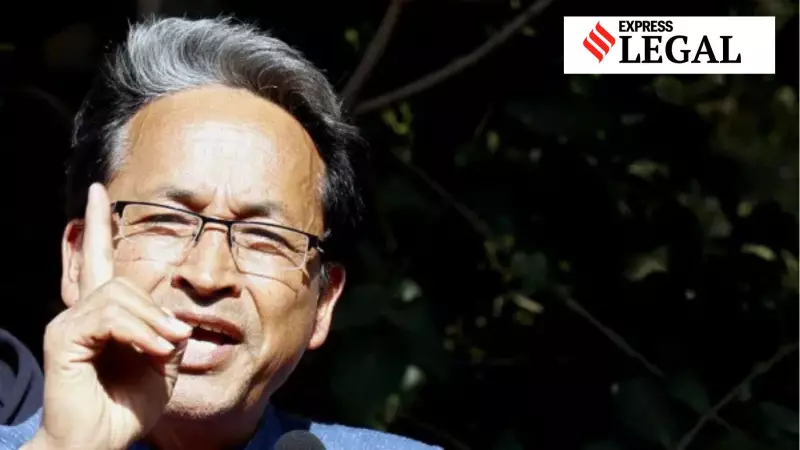
The Supreme Court of India is set to hear a crucial plea challenging the detention of prominent climate activist Sonam Wangchuk under the stringent National Security Act (NSA). The petition has been filed by his wife, Gitanjali J Angmo, seeking his immediate release.
Legal Battle Over NSA Detention
The hearing focuses on the legality of Wangchuk's detention, which began on September 26, 2025. He was later shifted to a jail in Jodhpur. The NSA allows for preventive detention of individuals considered a threat to public order or national security. The government's case hinges on accusations that Wangchuk incited violence.
This detention followed tragic events in Ladakh. Just two days prior, on September 24, 2025, violent protests demanding statehood and Sixth Schedule status for the region resulted in four fatalities and 90 injuries.
Kapil Sibal's Core Arguments in Previous Hearing
In the last hearing, senior advocate Kapil Sibal, representing Angmo, presented a robust defense. He argued that Wangchuk's speech, delivered after the violence, was intended to quell unrest and end a hunger strike, not to propagate further violence.
Sibal's primary legal submission was that the detention order is fundamentally flawed. He emphasized that the activist was not provided with the complete grounds for his detention. Furthermore, Sibal contended that Wangchuk was never given a proper opportunity to make a representation to the concerned authorities against his detention order.
Citing established case law, Sibal stressed that the law mandates the supply of detention grounds to the detainee. Failure to do so, he argued, "vitiates" or invalidates the detention order itself.
What Comes Next?
The Supreme Court's examination of these arguments will be pivotal. The outcome will not only determine Wangchuk's personal liberty but also set a significant precedent regarding the application of the National Security Act and the procedural safeguards afforded to detainees. The legal community and civil society are closely watching the proceedings, which underscore the tension between state security powers and fundamental rights.