

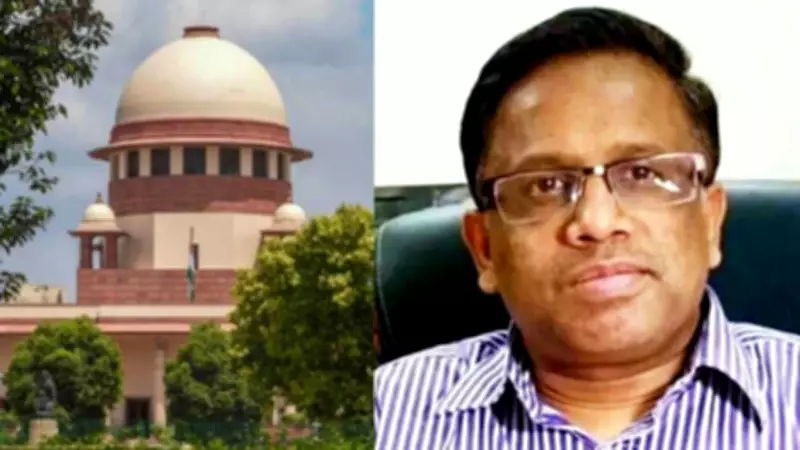
Supreme Court Judge Recuses Himself After Verdict Reserved in Rare Judicial Move
In an extraordinary development within the Indian judiciary, Supreme Court judge Justice K V Viswanathan has recused himself from a case after the hearing was completed and judgment reserved. This marks a highly unusual instance of recusal occurring at the stage of pronouncement of the verdict, highlighting the stringent ethical standards upheld by the apex court.
Background of the Case and Justice Viswanathan's Legal Career
Justice K V Viswanathan, prior to his elevation as a Supreme Court judge, was one of the country's leading advocates with a flourishing practice spanning 35 years. During his extensive career, he appeared in innumerable cases representing various clients, building a reputation for legal expertise and integrity.
The case in question involves a petition filed by Alchemist Asset Reconstruction Company Pvt Ltd (AARC). A bench comprising Justices J B Pardiwala and Viswanathan had heard the matter and reserved its verdict on March 17, following standard judicial procedure.

The Discovery and Immediate Recusal
After the judgment was reserved, Justice Viswanathan discovered that he had previously appeared as counsel for AARC during his advocacy career. This revelation created a potential conflict of interest, as judicial ethics require impartiality and avoidance of any appearance of bias.
Justice Viswanathan immediately recused himself from the case upon this realization. The bench subsequently recalled its order of March 17 and requested the Chief Justice of India to reconstitute the bench for a fresh hearing of the matter.
Official Statement and Judicial Protocol
The bench issued a formal statement explaining the situation: "This matter was heard, and the judgment was reserved. After the judgment came to be reserved, it has come to the notice of Hon'ble K V Viswanathan... his lordship had appeared as a counsel for the appellant in the corporate insolvency resolution process... In such circumstances, the order dated March 17 is recalled."
This rare occurrence underscores several important aspects of judicial conduct:
- Ethical Vigilance: Even after proceedings have concluded, judges maintain responsibility to ensure no conflicts exist
- Transparency: The immediate disclosure and recusal demonstrate commitment to judicial transparency
- Integrity Preservation: The action protects the integrity of both the individual judge and the institution
- Due Process: The recall of the order ensures the case receives a completely impartial hearing
The incident serves as a significant reminder of the high ethical standards maintained within India's Supreme Court, where even potential appearances of impropriety are addressed with utmost seriousness, regardless of procedural stage.






